In the Footsteps of Paul

In our last instalment we read of the bravery of the early christian preachers and the towns they travelled to.
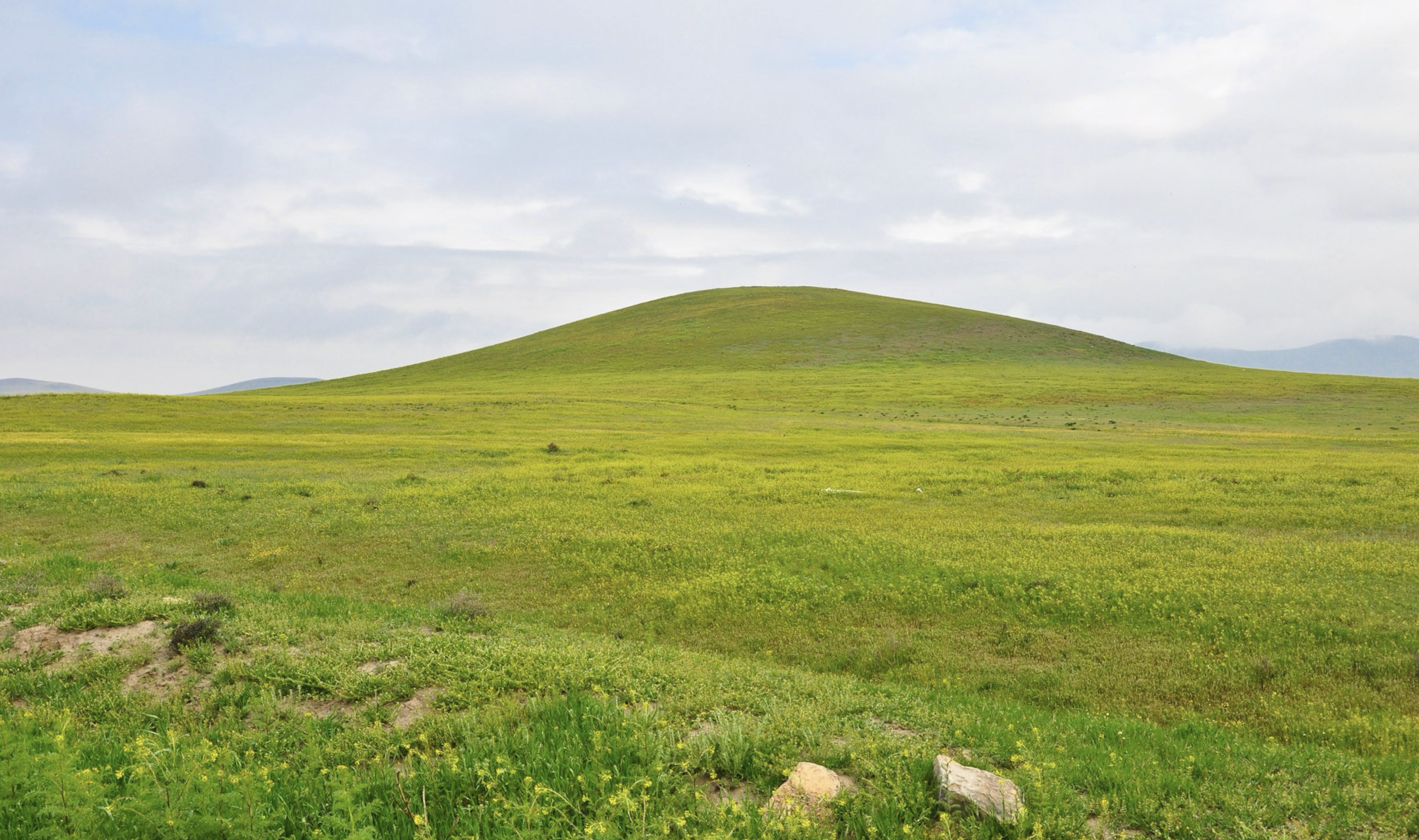
Unexcavated Derbe

Lystra and Derbe are two of the three unexcavated Christian sites in Turkey but they are still well worth visiting for the thrill the atmosphere gives you in these remote spots. Today in Lystra you can visit a small open-air museum where inscriptions and archaeological fragments lie on the ground. It is good to see that the historical setting of our New Testament is so accurate and visible to us 2,000 years on.

Lystra – modern day Hatunsaray – is in a lush valley about 35k south of Iconium and it had been a Roman colony town for more than 60 years when our friends get there. More than 1000 retired soldiers were given land and the town grew quickly. The bible records a strange incident when Paul and Barnabus arrive. Another event that divides people into believers and haters. We need to think which camp we want to be in. Paul looks into the eyes of a man who has been unable to walk since birth. He sees the man’s faith and he heals him so that the man gets up and walks. What a miracle! The crowds who see this are a superstitious lot and they go a bit wild calling the disciples Zeus and Hermes – Roman pagan gods. Paul immediately tells them to desist and explains again the power of Almighty God the Creator and the Sustainer of all life. And once again this message drives the Jewish population mad and they stone Paul, drag him out of the city and leave him for dead. Thankfully the new believers in Jesus stay around to help him recover and the very next day he leaves and heads to Derbe. What an amazing man he is.

I wonder if Paul thought back to when he was on the ‘other side’ of Christianity? – when he was the one who dragged men and women off to prison, authorised torture and death for these fledgling believers. Perhaps these memories make him ultra aware that he is now the one suffering, taking the beatings and the stonings. He infamously stood by when the faithful disciple Stephen was killed by the mob. There is perhaps no-one else in the bible who had such an amazing turn around in his life from hater to lover than Paul. His new life sends a wonderful message to us that there is always a way back to faith and forgiveness when we turn around and look to God. All these thoughts might have occupied his mind while he is chased out of yet another city, fearing for his life.

Bruised and battered from the stones and the kickings, he and Barnabus head to their next destination. Derbe is today a dry and dusty mound. You can climb up to the top and walk around the scrubby ground and find pottery shards and glass fragments scattered everywhere. You can seem for miles across the plains. When Paul was there Derbe was a frontier town and he visited it three times on his various journeys (Acts 14, 16, 20). One of Paul’s companions on a trip was a man called Gaius and he was a trusted friend who lived in Derbe. Paul gave him the commission to take the collection that had been raised to help the poor Christians back in Jerusalem. Gaius was obviously a devout disciple and one whom Paul knew would be best placed to disperse the funds back in Israel. Derbe turns out to be a happier town for our friends. Acts 14 v 21 says, “They preached the gospel in that city and won a large number of disciples.” Today there is also a stone inscription in a local museum, from a few centuries later, which reads “the most God-loving Michael, bishop of Derbe”. A town of faithful believers.
In the Footsteps of Paul

In the article on 16 May 2024 we noted that Ramsay found something amazing at Antioch in Pisidia.

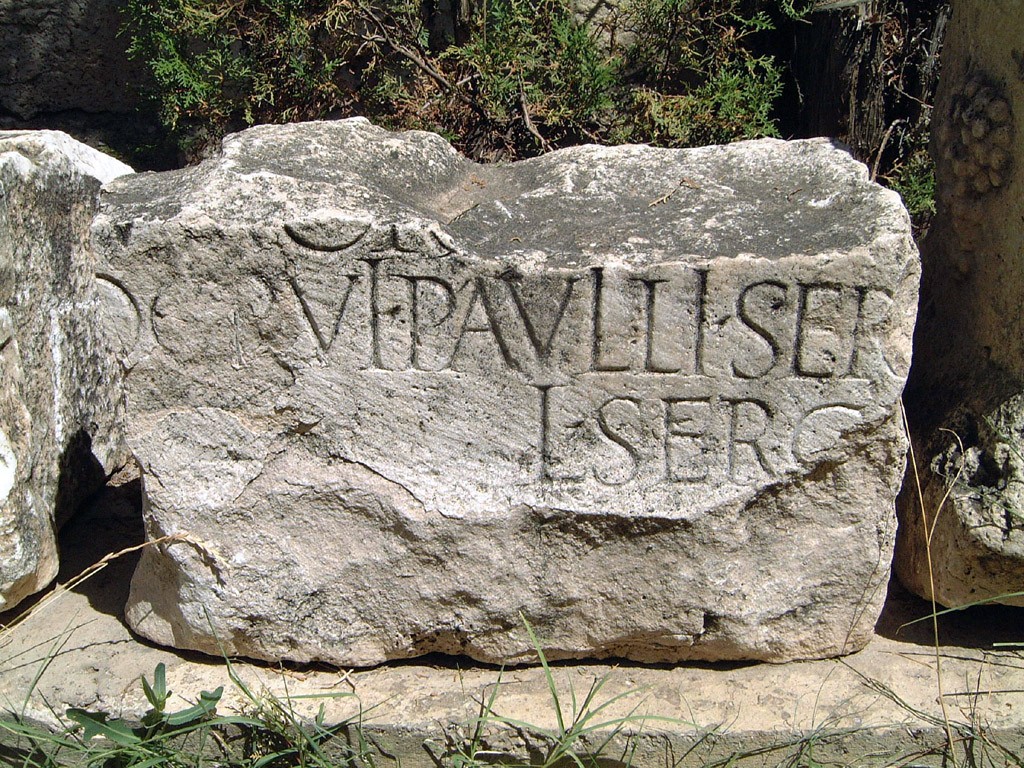
Ramsey was excavating in Antioch in 1912 and came across Latin inscriptions detailing names of the son and the daughter of Sergius Paulus. Serguis Paullus filio and Sergio Paulla. The daughter is married to an influential Roman working for the Emperor. They were a prominent family of senators, wealthy and well-connected citizens of this Roman colony town. Pisidian Antioch was the home town of our proconsul currently serving in the army on Cyprus. His family were large landowners, influential and powerful all around that region. So perhaps we can surmise that our new joyful convert begs Paul not to delay on the coast but to go straight north to speak to his children and wider family about Jesus. And so that’s exactly what Paul does! 

Photo: Sergius Paullus inscription in Yalvac (modern day Antioch in Pisidia) museum

How does he get on when he arrives? Not at all well, sadly …..

Antioch was a city set 900m above sea level, high in the hills, famous as a spa town, colonised by the Roman army and prosperous. We hope that Sergius Paulus’ wider family became believers, but the local Jewish population was not so receptive. And within a week or two Paul and his friend Barnabus were expelled and chased out of the city, running for their lives. Even with the first hand testimony of witnesses to Jesus’ life, death and resurrection, not everyone was convinced. The Jews in the city see this new Christianity as a threat to their traditions and influence and they are not happy. And scared people often resort to violence when their arguments are weak.

We see that today in our world too.  As his custom was, the apostle Paul goes to the synagogue in Antioch and preaches about Jesus. He lays out the history of the Jewish people and how they had prophets and kings and signs from God to tell them of the coming of the Messiah. But they didn’t want him when he came and they hung Jesus on the cross.

Paul tells them God raised him from the dead and from that moment on the new world began. The plan and purpose of God was now open to non-Jews – everyone who follows Jesus will be in God’s new family. This was not a message the powerful men in Antioch wanted to hear and they resorted to violence and intimidation and drove Paul and Barnabus out of the city.

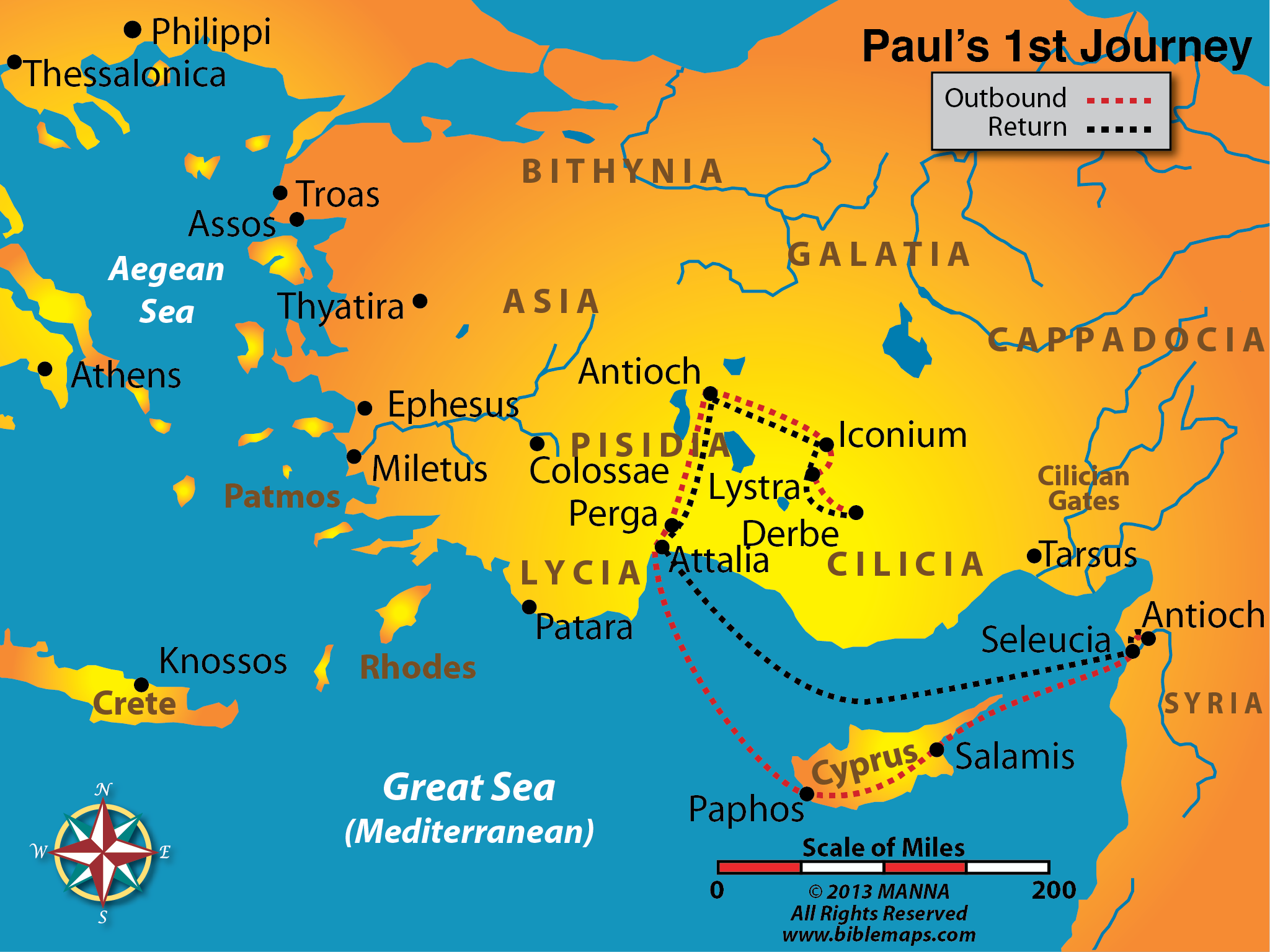
The pair went first to Iconium – modern day Konya – and again got a very mixed reaction. Lots of new believers and lots of haters. Pretty much like our world today with its reaction to Jesus and his commandments and teachings. The duo heard that there was a plan afoot to kill them by stoning and so yet again they fled again. They walked hurriedly across the hills to two smaller towns -Lystra and Derby – and, undaunted by the threats of death, they preached about Jesus (Acts 14:6). Their faith and confidence in God is amazing – wouldn’t you love to be so bold! To be unafraid in a world that is now so dismissive of faith and belief.

See you again next time…..

Olympic Sports in the Bible

The modern Olympic Games are a revival of the Ancient games which were hosted on the plains of Olympia in Greece, as part of a pagan festival.  People in Bible times were aware of these games and others like them, and there are references to these sports in the Bible.

The apostle Paul was born approximately AD 0-10, so the games would be a regular feature during his lifetime.  It is believed that he referred to these athletic games in 1 Corinthians chapter 9 verse 25 when he wrote “Everyone who competes in the games goes into strict training.”  All the participants had to exercise self-restraint in order to win the prize.  That might be constraints over leisure time; training rather than spending time with friends, or constraints in their diet; eating healthy, energy giving food rather than the things they perhaps enjoyed and preferred more.

Games were also held in Corinth every two years (the year before and after the Olympic games) and involved similar events.  The Christian believers at Corinth would be very familiar with the concept of an athlete from these games and it was a good example for Paul to use.  In 1 Corinthians chapter 9 verse 24 he began by saying “Do you not know that in a race all the runners run, but only one gets the prize ?  Run in such a way as to get the prize.”  Paul was likening the Christian journey through life, to a race, with Jesus’ followers as the athletes.  The athletes at the games had to have self-restraint and dedication to achieve their best.  In the same way, the follower of Christ has to exercise self-restraint in the way they lead their life and show dedication to Jesus.

The prize that the athletes won at the Ancient games was an olive wreath crown that would soon decay.  The prize that Christians are striving for will last forever, that is, they will receive immortality.  Christians try to live their lives doing what God wants of them.  In the Olympics only one person can win an event, but in this race, the prize is available to anyone who wants it and strives for it.

In another of his letters to the early Christian church, Hebrews chapter 12 verse 1, Paul advises “let us run with perseverance the race marked out for us”.  Perseverance means endurance and constancy.  Therefore it is a long race which requires continual effort and stamina over the course of a lifetime.  There is guidance provided throughout the Bible to help us with this.  Take a look at it and find out how the prize of immortal life can be yours too.

A picture paints a 1000 words

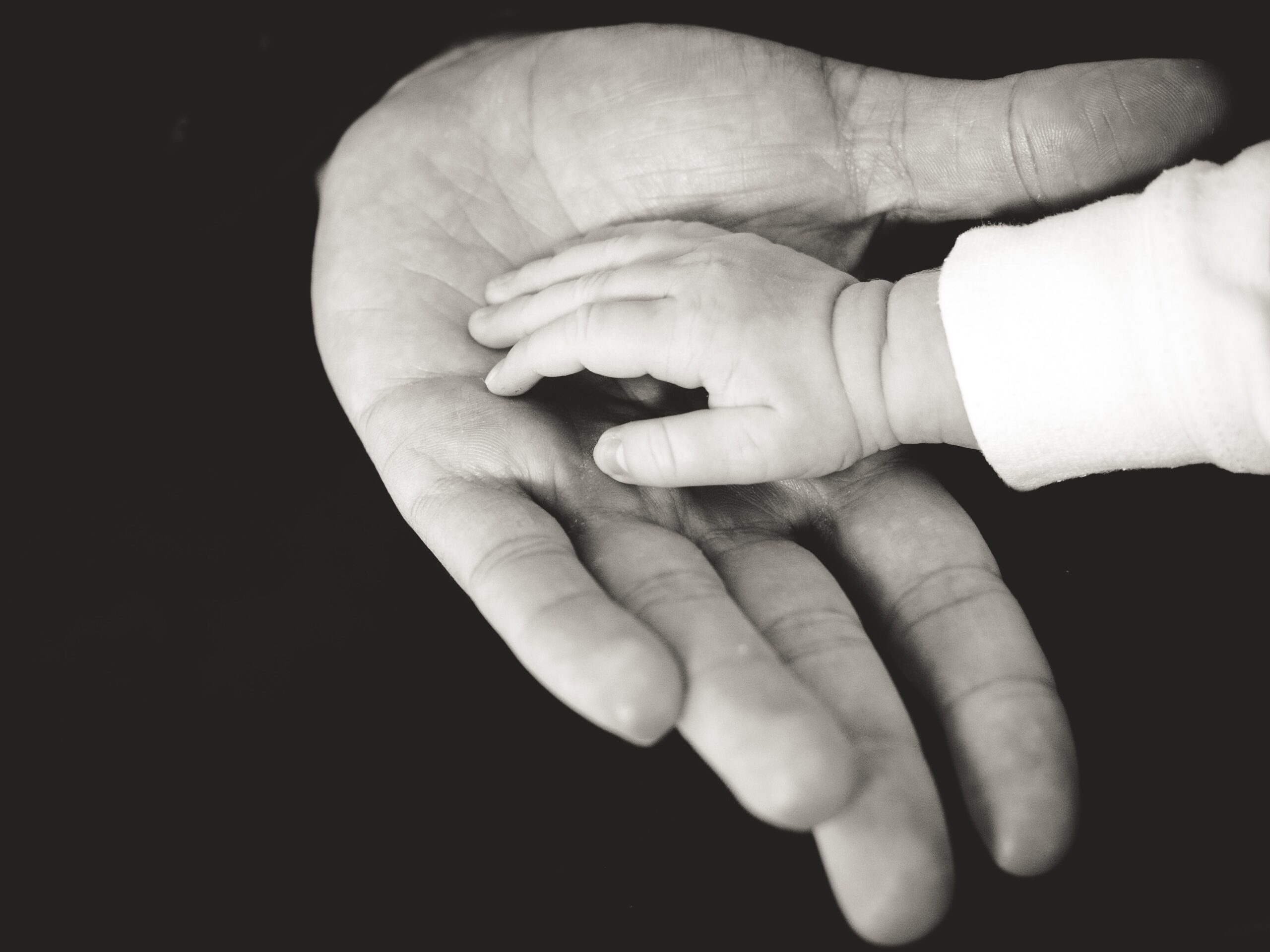
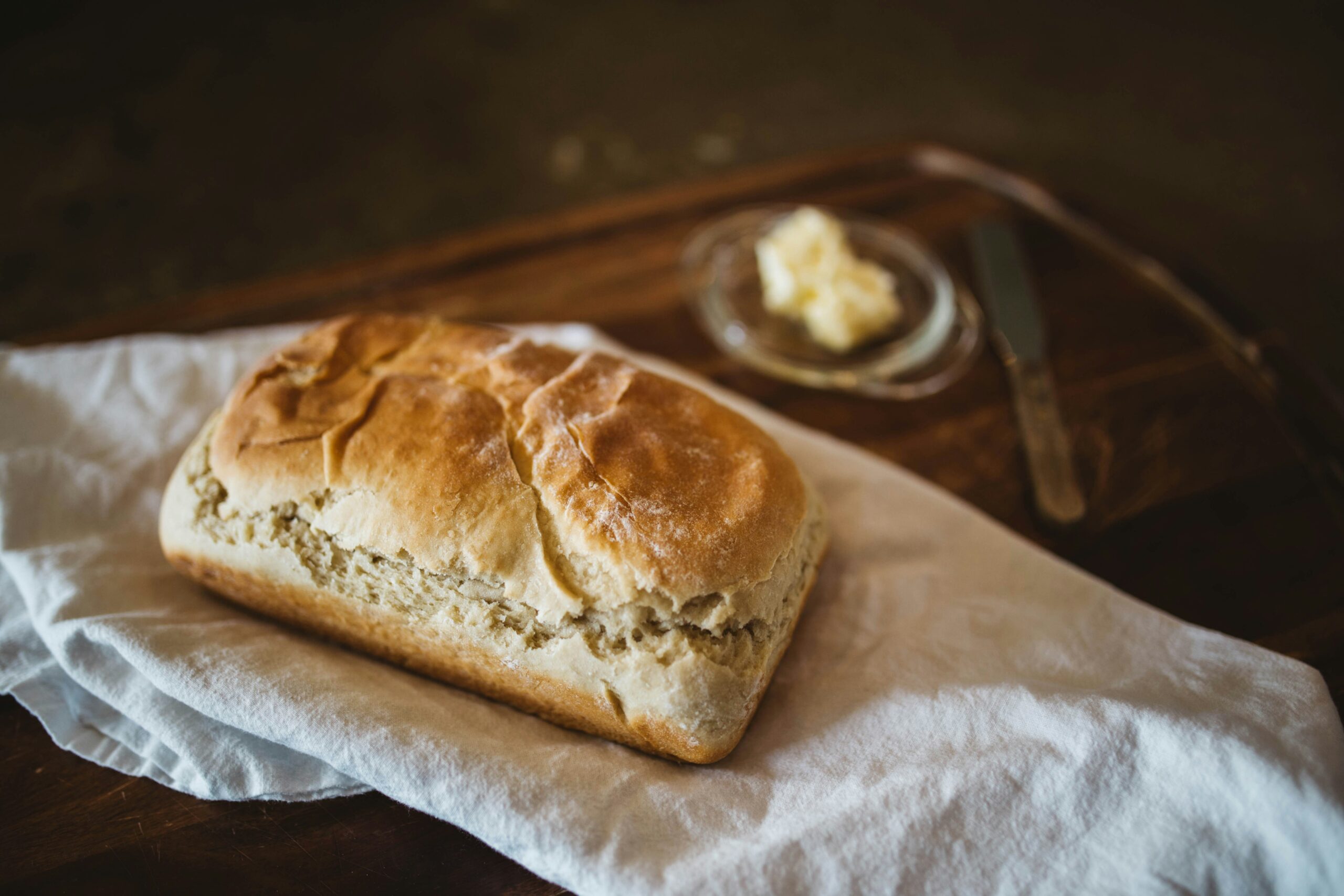
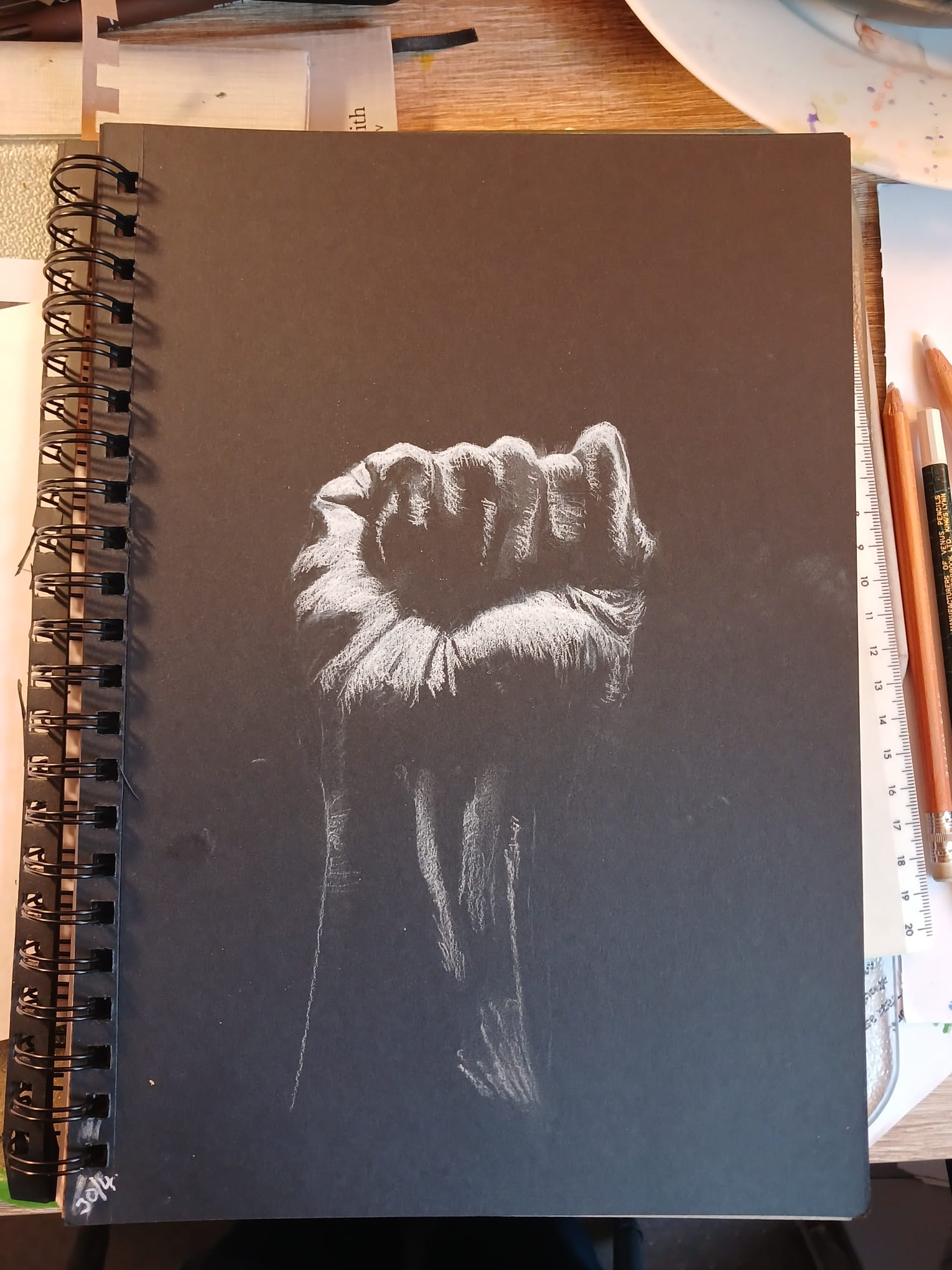
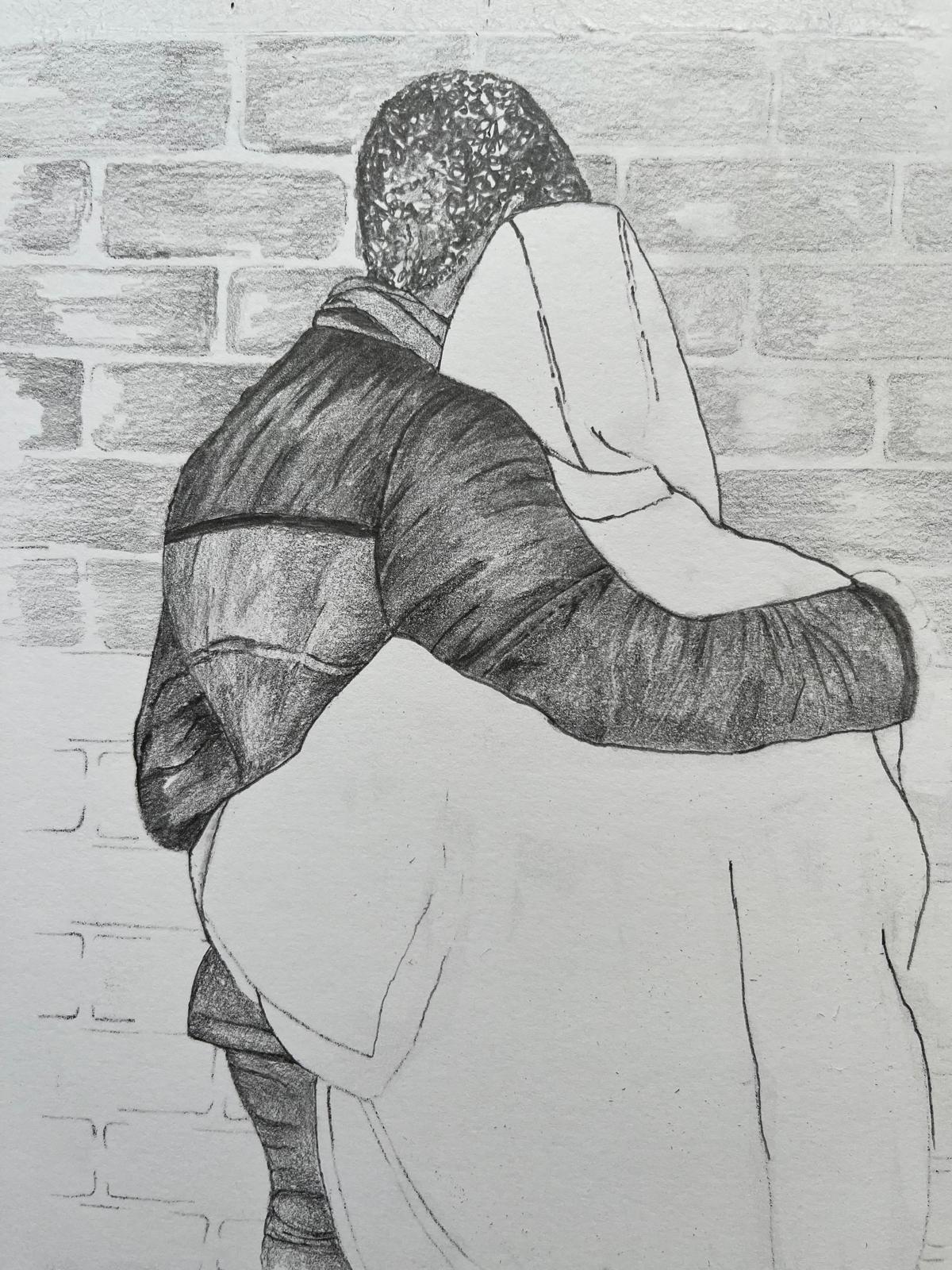
At art club we recently used some photographs to help us express what the Lord’s prayer means to us.  We chose a different picture to illustrate each phrase.  I hope these bring this well-known Bible passage to life for you too.  At the end is a sample of the artwork we produced from these inspiring words and pictures.

liane-metzler – unsplash.com

Our Father in heaven, hallowed be your name,

niklas-tidbury-unsplash.com

your kingdom come, your will be done, on earth as it is in heaven.

nasa-unsplash.com

Give us today our daily bread.

And forgive us our debts, as we also have forgiven our debtors.

And lead us not into temptation, but deliver us from the evil one

Bible reference: New International Version

Who can we trust?

Fake photographs.  Fake emails.  Fake news.  It leaves us wondering “who can we trust these days ?” 

We live in a world that has so many problems, whether they’re global problems or our own, personal ones.  Many need to be addressed urgently.  So is there anyone we can trust ?

It may be surprising, but the answer is “yes”, there is someone we can trust.  Someone who is always there and never changes.  The Bible tells us about God, the creator of the world, which He created for His pleasure and for a purpose.  It also refers to Him as a Father and that we are His children.  He is always there and will never leave or abandon us.  We can talk to Him in prayer – to thank Him for what He has done for us, but also to discuss our problems, knowing that He will help.

The Bible explains His plan with the earth and all humankind.  God’s son, Jesus, will return to the earth and rule the nations with peace and righteousness.  God can be trusted to do as He says.  It gives us all hope in what sometimes feels like a hopeless world.  Let’s put our faith and trust in Him.  The Bible says anyone who comes to Him must believe that he exists and that He rewards those who are sincerely seeking Him.

Personally, this has been a great help to me in my life.  Maybe it could help and encourage you in yours, however difficult the problems feel at the moment.  Isn’t it at least worth looking into ?  It costs nothing to open a Bible and see just what God has to say to you.  Maybe it could change your life now and be a wonderful hope for the future when Jesus returns.

In the Footsteps of Paul

Back to the blue skies of Turkey….

Why the rush to Pisidian Antioch? Well, we mentioned last time that Paul had sailed from Paphos in Cyprus. Acts 13 tells us that the chief Roman proconsul on the island was a man named Sergius Paulus. He hears Paul teaching about the resurrection of Jesus and becomes a Christian believer. If you become a follower of Jesus, the first thing you want to do is tell others – especially your family – about this amazing change in your life. What’s a recent convert on Cyprus got to do with a Roman colony town in the middle of the Turkish mountains?

It took another 1,866 years for a possible explanation to be dug up! The end of the 19th century produced a long line of European archaeologists who found rich sites to excavate all over the Middle and Near East.

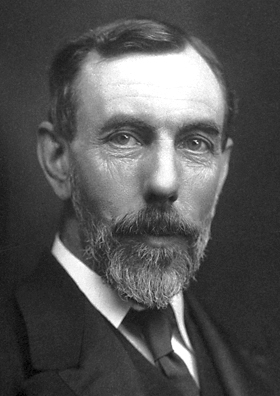
William Ramsey was a Scottish archaeologist and Crown-appointed university scholar. He was raised an atheist and one goal in his work was to refute the bible and its claims. But as he worked he discovered more and more facts that confirmed the accuracy of the scriptures. He stunned the intellectual world of his day by converting to Christianity and said that the narrative of Paul’s travels rests on first-class authority. Ramsey is still considered the finest authority in the world on the history of Asia Minor – a brilliant mind; convinced that the bible was true. He believed that the Bible should be accepted as the word of God because of the evidence of his explorations and discoveries.  Next time let’s look at one of the remarkable inscriptions discovered here.

William Ramsey

In the footsteps of Paul

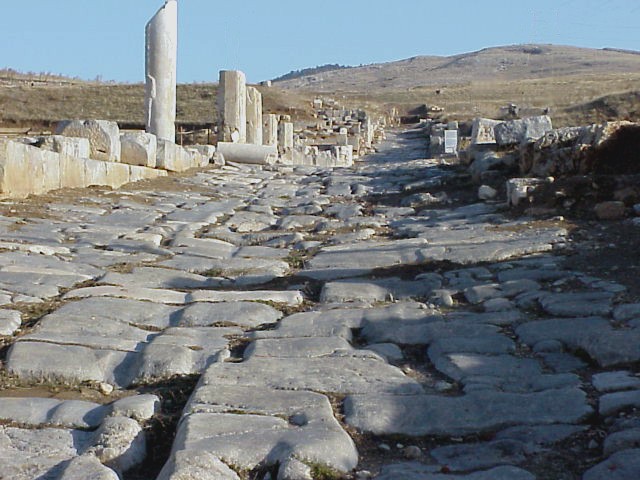
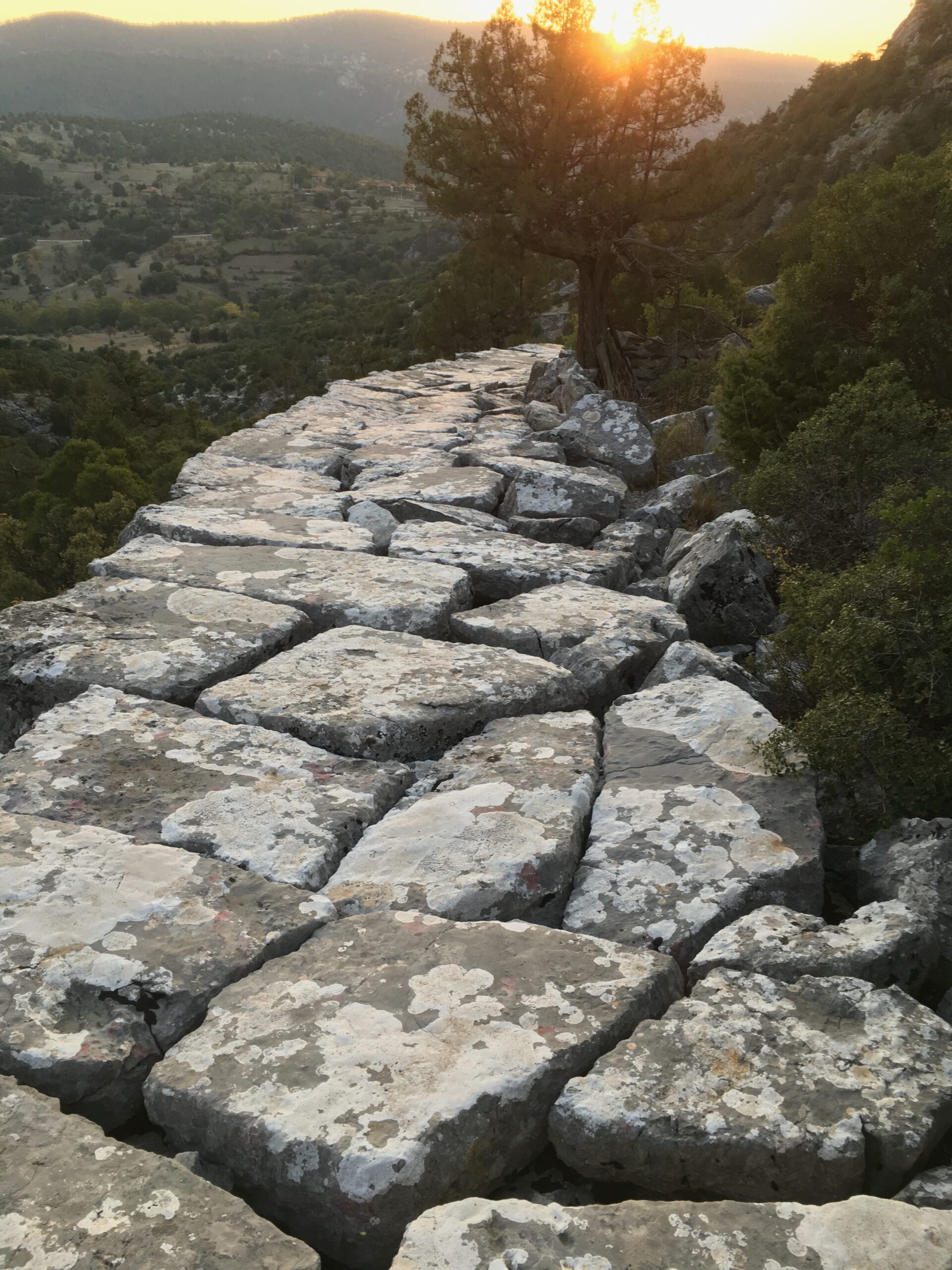
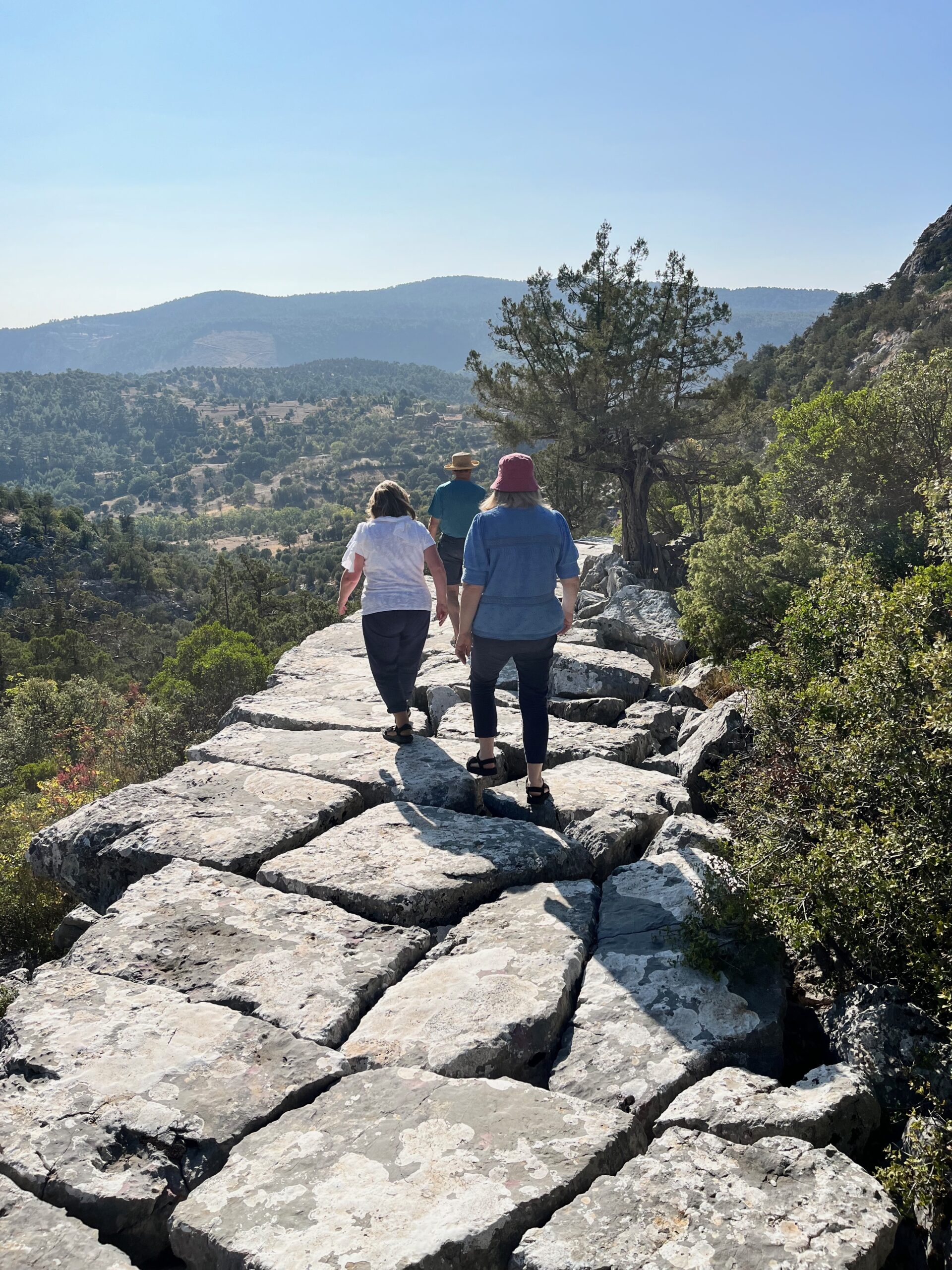
So Paul sets off. It is clear that without biblical texts outlining the journey in detail that we don’t know his exact route. Modern scholars reckon there are perhaps four possible routes that Paul may have travelled on but these ancient pavements give us a real idea of just what travelling was like for him. Here are some pics of one stretch of the trail that is particularly inspiring. It takes a bit of searching to find the new waymark red and white paint signs which lead steeply uphill to the now ruined city of Adada. There is still a flight of wide white rock steps that you can clamber up – your only companions sheep and goats and the occasional bird flying by. From the plain you walk up through a narrow valley where the original road paving slabs have tumbled down in successive earthquakes. But there are still smooth broad flag stones remaining in place. It is an amazing place to walk and imagine Paul climbing up and down before perhaps resting under a tree for a bit of shade or stopping for water.

The Taurus Mountains rise up steeply from the coast but Paul is undeterred by the prospect of crossing them. He is determined to get walking on the tough, steep terrain through the canyons and over the peaks to Pisidian Antioch. Why does he make this strange travel plan? For centuries no-one really knew what lay behind this decision as the bible narrative does not give his reasoning. But an archaeological find, early in the 1900’s, in the city at the end of his journey, may shed some light on this for us. A detailed stone inscription will give us a very interesting link between where Paul has just been and where he was planning on going. Read more next time…..

Walking with Jesus

There is a chapter in the Bible that I want to share with you because I feel that it is one of the most inspiring, most hopeful and most life-changing ones that we can read !  It’s Luke chapter 24.

Image by rneitzey from Pixabay

From a timing perspective, this occurred after the crucifixion, but most importantly, the tomb was empty and Jesus was alive.  Angels had told a group of women that Jesus was alive, and he had also appeared to Mary in person and spoken to her. 

Later the same day two of Jesus’ followers, were walking away from Jerusalem towards a village called Emmaus.  This is recorded in Luke 24 verses 13-35.  One of the travellers was called Cleopas and the other person is un-named.  There has been a lot of speculation about who the second one was.  There may be some clues in the text, but the reality is, we are not told, when we could have been.  There could be many reasons why we are not told certain people’s names in the Bible, and I believe one of those reasons is because they could be us.  The Bible is a written record of the lives of real people.  Real believers.  But it has also been written for us to engage with and identify with. 

The journey would have taken at least two hours, and the two were joined on their walk by Jesus, although, at the time they didn’t recognise him.  We are on a journey in our lives.  We are given the opportunity to meet Jesus while we are on this walk, but just like the two disciples, we might not know it to begin with. 

In verse 17 we are told that they were sad and very confused.  They admitted to the stranger that their hopes had been shattered.  They had been followers of a man called Jesus and had hoped that he would be the new leader of Israel, but he had been put to death by the Roman authorities.  The future was therefore uncertain.  There was a risk that their lives would be danger too.  It is interesting that they told the stranger that there had been reports of the empty tomb and that angels had told the women that Jesus was alive, but they didn’t seem to believe it, because they and their other friends had not seen Jesus himself.  They wanted the evidence of their own eyes to know it was true.

Can we be like that ?  Are there times in our life when we find it hard to believe and we are heading in the wrong direction ?  What did Jesus say to the two on the road to Emmaus ?  The answer is in verses 25-26.  “He said to them, “How foolish you are, and how slow to believe all that the prophets have spoken !  Did not the Messiah have to suffer these things and then enter his glory ?”.  In verse 27 we are told that Jesus then took time to explain the scriptures properly to these two followers.

Jesus reached out to them on that road then and he reaches out to us now.  He is not willing for any of the people he has called, to continue going in the wrong direction.  The gospels are full of accounts of him reaching out to just one, maybe two specific individuals; just like in this chapter.  Everything we need to know and everything we need to touch our hearts is there in our Bible, but we might need some help to understand it.

Image by congerdesign from Pixabay
Image by congerdesign from Pixabay

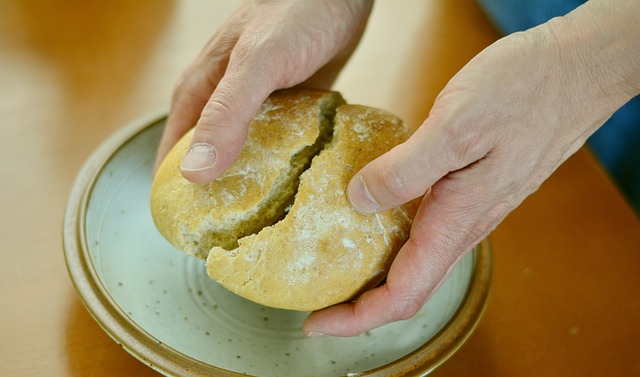
The two disciples invited the stranger to stay with them.  Jesus agreed and we are told that “When he was at the table with them, he took bread, gave thanks, broke it and began to give it to them.  Then their eyes were opened and they recognised him.”  Their encounter with the risen Christ changed their lives, just as it can change ours.

Jesus is alive today and all we have to do is invite him to be part of our lives.  We have to invite him in to stay with us; not a fleeting visit, but to stay, to become a permanent fixture in our lives. 
He has promised that he will be there to help us when we are sad and confused. 
He will walk with us when we are worried and scared. 
He will “open our eyes” and help us to understand what the Bible says about him and what that means to our lives. 

Where is your walk through life taking you and are you willing to accept Jesus’ company on that journey and listen to him ?

Following in the footsteps of Paul

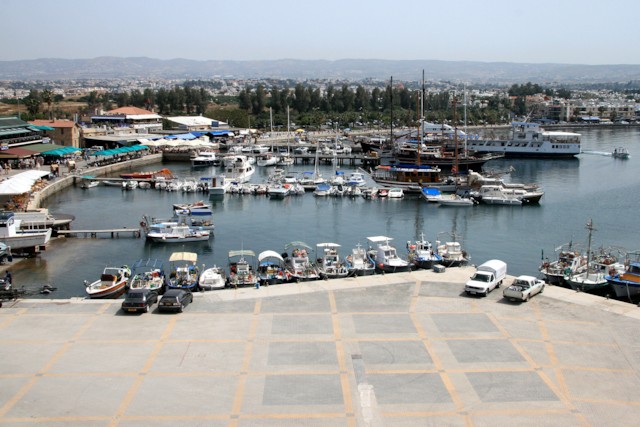
Modern day Paphos

Leave the English winter and head back out into the sunshine… Paul and two friends arrive by boat from Cyprus at the end of a long hot summer in AD 46. Acts 13 says they sailed from Paphos and came ashore in coastal Pamphyllia.

The narrative tells us that the companions land at Perge – their landing port has long silted up and the nearest harbour is now Antalya in modern Turkey. You might think that after a few sea voyages (it had already been a long Mediterranean trip from Syria to arrive at Salamis in Cyprus) the trio would want to spend a bit of down time at the seaside. Here it would be easy to find a ready audience for this new religion in the hustle and bustle of the fishing port. Perge was a transport hub for boats with traders from all over the Mediterranean so there would have been no shortage of interesting folk to talk to.

But no, we are told in Acts 13 v 14 that Paul wants to head off north, on a dangerous journey, almost straight away. He has set his heart on walking over the mountains to Antioch – over 200 kilometres inland from the coast. Antioch – modern day Yalvac – was a fairly recently established Roman colony town set high in the mountains. Why was Paul so keen to get to Antioch? Why not just stay enjoy the beach and talk to the cosmopolitan folk in town? These mountains are wild and dangerous ….. find out more soon…….

Signs for all times

Picture Credit: timon-studler-sjynUnr9ikA-unsplash

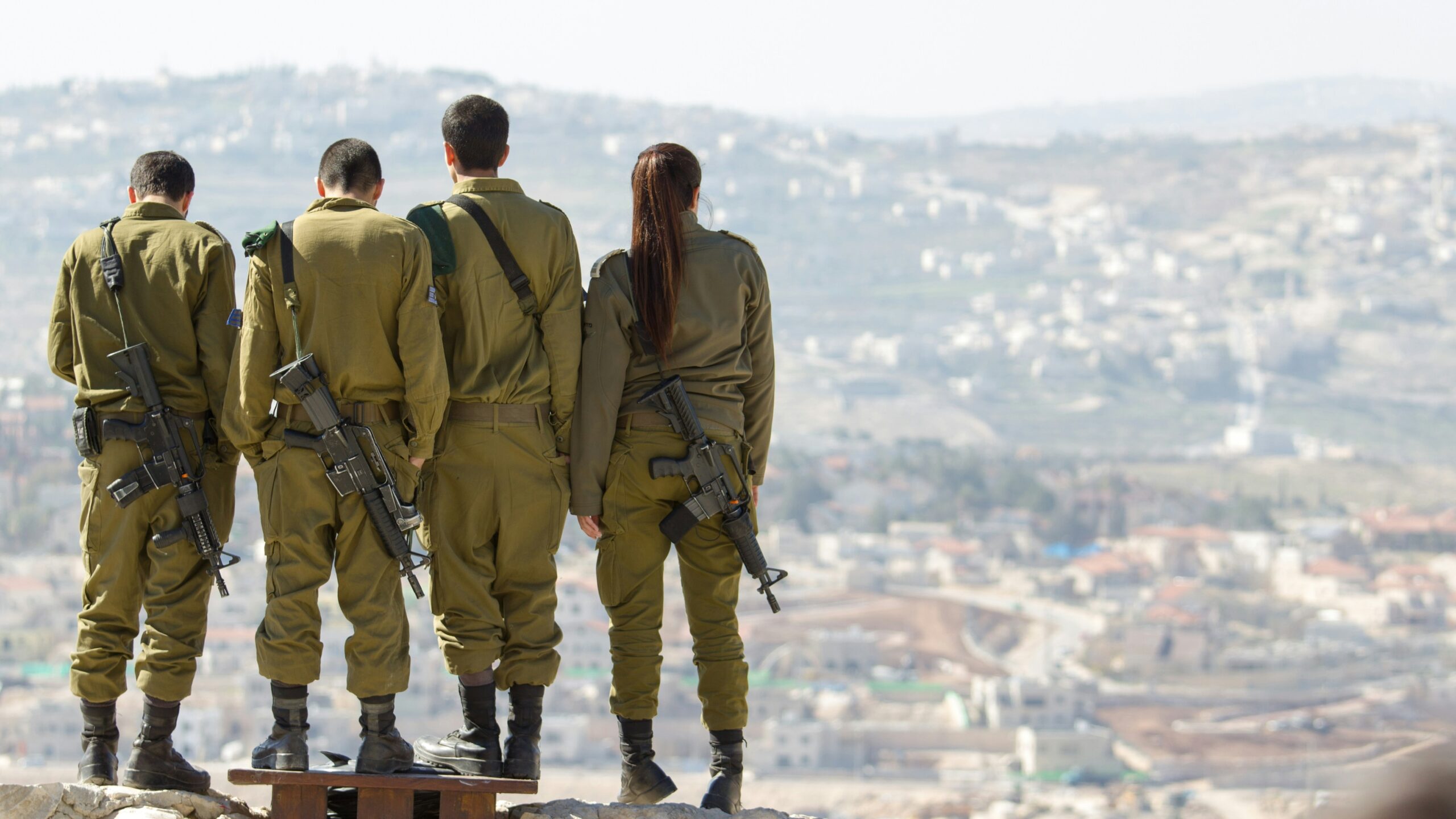
I guess we are all of us watching what is going on each day between Israel and Palestine’s Gaza area. It is a truly terrible situation, and civilians and children are suffering badly. So many dead already, so much suffering. So much ‘collateral damage’, and so much spreading war around the Middle East and Red Sea.

Although the blame for starting this latest war lies evidently with Hamas and Palestine, by launching a surprise raid, killing 1400 and taking over 200 people hostage, the Israeli response is surely both disproportionate and deadly.

We are all of us involved in some way. Britain is openly supporting Israel, as is America. There is evidence that Russia is supporting the Palestinians, and maybe China too, at least in its anti-USA attitude.

And now there is evidence that Iran is pushing against US bases on the Syria border, while Israel is also handling border tension to the north with Lebanon.

It is as tense a time as I have known in 50 years. The Bible offers multiple prophecies about the ‘end of time’, and of human kingdoms, and for sure the signs of this are all over the current situation. Israel is in trouble to the south and west, to the north and the east. Rather closely in line with the prophecy of Obadiah, verses 15 to 21.

Have a read of that prophecy, and work out for yourselves which areas of Israel are referred to in Old Testament language. Yes – the Gaza strip, the Sinai peninsula, the Golan Heights, the West Bank of the Jordan river, the East Bank too, the Lebanon border – they are all there in this Old Testament prophecy from c 850 BC!

So is THIS the time of the end? It might be. We should be ready, in case it is. And things could deteriorate very quickly. But let me tell you a personal story….

In June 1967, when I was 12, my mum saw me off to school on my bike with a strange final message. ‘If your Dad and I are not here when you come home, don’t worry, Jesus has returned and we will be with him in Jerusalem’. I was not happy …

It was the time of the ‘6 day war’ between Israel and Egypt, with Jordan and Syria pitching in too against Israel. Israel was fighting on every front. And Israel won, in 6 stunning days of fighting, taking the Sinai peninsula, the Gaza strip, the West Bank and the whole of the city of Jerusalem, which was previously divided.

Mum, and Dad, were still there when I got home. It wasn’t the time of the end, but I was scared enough. Mum was very disappointed and I was fairly well traumatised all day, because at 12 I had little idea what she was talking about. She did apologise…
Since then there have been multiple wars around Israel through my life – especially the Yom Kippur war in 1973 when I was 19, 50 years ago this month. Unbelievable.

And countless fights between Israel and Palestine ever since, despite many attempts to broker lasting peace. The simple problem is – they both claim ownership of the same land. But God gave it to Israel…..

There is an interesting reflection of this history in the New Testament, in the Book of Acts, ch 7. Recorded here are the words of a man called Stephen – a deacon in the church. In response to accusations he makes a spirited defence – starting with an 8 minute summary of Jewish history. Why?

He was accused – falsely – of doing wrong in the Jewish faith – Acts 6 v 11-14
In his defence he goes right back to Jewish roots – to Abraham. Know your audience – the first rule of speaking!

And ch 7 v 4-5 includes the very issue that still encompasses Israel and Palestine today. And then he goes through the generations to Moses – who Stephen was accused of blaspheming.

His tone changes suddenly in v 51-53. He turns the charges around, onto the Jewish leaders, who crucified Jesus Christ. The change of pace and tone is sudden and interesting – but that is another story.

Very suddenly – it is the time of the end for Stephen. He realises that they are not listening, not accepting. They are going to slay him. What does he do? Well, he accepts it humbly – and is witnessing to his Christ right to the end. His truthful words lead directly to his death.
V 54-59 they stoned him to death. Some of us may have seen that terrible act of justice or revenge in our own lifetimes. It is a brutal thing.

But his vision was clear – v 56 – ‘he could see his Lord’. And at the end – note the generosity of his spirit (v 59-60) – ‘do not hold this sin against them’
This was just like the Lord Jesus Christ, when he was close to death on the cross. ‘Father forgive them, for they don’t know what they are doing’ (Luke ch 23 v 34). Stephen was a Christ-like man.

So this is how we must be at the end of time. Could it be now? Well maybe, maybe not. But we must always be ready, watching, waiting, focussed. Ready for the end of time at all times.

And ….always seeking forgiveness, so that we are newly washed and cleansed.
May our Lord bless us all, while we wait and watch, and pray for the end of violence, of sin, of oppression, of hunger and death itself. We need God’s kingdom, of justice, and mercy, and truth.