
Someone Worth Looking At

We can become distracted by our mobiled phones

Photo by Richard Williams on Unsplash

It’s surprisingly easy to pick up your phone to check one thing and emerge twenty minutes later knowing rather more than you intended about someone you’ve never met.

There’s plenty to enjoy in what we watch and read. But what holds our attention also helps to shape us. Some things leave us refreshed or even grateful. Others leave us restless, comparing our ordinary lives with everyone else’s social media highlights. It’s worth asking: what are we giving our eyes to, and what is it doing to us? 

Paul offers a hopeful possibility: as we look towards Christ, we are gradually changed to become more like him. This isn’t another task to add to the self-improvement list. It’s an invitation to spend time with someone whose goodness can begin to rub off on us. 

That brings us to John, on the island of Patmos. Far from his fellow Christians, he receives a vision of Jesus that gives him far more to see than he could have expected. (Revelation 1:9–13)

This is no faded figure from the past. Jesus is alive and present, standing among the lampstands that represent his churches. His white hair speaks of wisdom; his eyes, like a flame of fire, suggest a gaze that misses nothing. He sees beyond appearances, knowing both what needs to change and what hurts. (Revelation 1:12–14, 18, 20; 2:2–4, 9)

There is something unsettling about being seen so clearly. But there is comfort in it too. We don’t have to explain everything perfectly, or pretend we’re managing better than we are. 

John is overwhelmed. He falls at Jesus’ feet as though dead. And then comes a wonderfully tender moment: Jesus places his right hand on him and says, “Do not be afraid.” (Revelation 1:17)

The presence of the Lord Jesus brings John to the ground. He is also the one who reaches out to reassure him. His glory and his kindness work together.

Perhaps that is where this vision invites us to begin. Not with a guilty promise to spend less time on our phones, but with a little more room to look at Christ: to notice his wisdom and his care for his people. 

We don’t have to turn away from everything else that interests or delights us. But among all the things asking for our attention, here is someone worth returning to. As we come to know him better, we may find ourselves becoming a little steadier, a little less afraid. 
The Interruption You Didn’t Schedule

Tuesday will look a lot like Monday. Next year will look a lot like this one too. Most of us live like that. We assume life will stay as it is. Usually it does. That is where the trouble hides.

Photo by Marija Zaric on Unsplash

Acts 10 tells the story of Cornelius, a Roman officer. He had a good life. He was generous. He was devout. He was well liked at home. The Bible speaks well of him too. That makes what happens next surprising.

He doesn’t get praise. He gets interrupted.

It is three in the afternoon, the hour of prayer. A familiar part of the day. Then something breaks in. He is told to send for Peter, a fisherman he has never met. It makes no sense. And the message is plain: Cornelius is missing something.

Read the chapter and a pattern of interruption stands out. An angel interrupts Cornelius at prayer. A vision interrupts Peter at lunch. Messengers interrupt Peter while he is still thinking about the vision. Then Peter is interrupted again in the middle of speaking. Four interruptions. None of them convenient. All of them kind.

Here is the uncomfortable bit: a well-run life is hard to interrupt.

If your days are chaos, you expect change. But if life is working — a career, a routine, a settled set of views — you want to keep it going. Every hour is spoken for. Every question already has an answer. That is not always arrogance. Sometimes you are just busy, and life feels fine.

And notice this: Cornelius was not resisting anything. He was praying. It was habit. He was not expecting interruption.

Most of us are closer to that than we want to admit. We don’t reject a new way of life. We just never leave room for it.

An uninterruptible life does keep us safe, in a way. Safe from being wrong in a way that changes us. Safe from having to let go of a grudge. Safe from facing that two-in-the-morning ache of anxiety, because managing it feels easier than letting anything heal it.

But that’s not peace. It is a stalemate. And God loves us too much to leave us there.
Look who does the interrupting. Cornelius would never have thought of sending for Peter. Peter would have called the whole thing out of the question. Neither of them planned it. Both ended up somewhere neither could have reached alone.

The initiative was never theirs. It was God’s. That is how new life begins. Not with us improving. With him coming in. At the end of the chapter Peter says they killed Jesus, hung him on a cross. Finished. Buried. But God raised him to life on the third day.

Two small words: but God. Not you tried harder. God acted. Paul says that while we were still sinners, God showed his love for us (Romans 5:8). He tells the Ephesians, “But God, rich in mercy, made us alive” (Ephesians 2:4-5). Grace is always like that. It arrives before we think to ask.

So the question is not whether you are a good person. Cornelius was. The question is simpler: are you still reachable by a God who wants to give you more than you have settled for?

Perhaps something in you feels unsettled. A discomfort you cannot quite file away. A quiet sense that life is respectable but still hollow. Every instinct says tidy it up. Get back to the routine. Prove everything is fine.

Don’t. That may well be Him, and He is not coming to scold you.

Cornelius could have finished his prayers and died admired by those who knew him – and unchanged. Instead he sent for the man. He left the routine open long enough for Christ to walk in.

Hope rarely knocks politely. God interrupted a good man’s prayers to give him Jesus.
Let him interrupt yours.

Lessons from Judges 2

A challenging book

The book of the Judges can be difficult to understand. Its stories contain violence, murder and bloodshed, and some of its accounts are particularly challenging.

The book ends with the words:

“In those days there was no king in Israel; every man did what was right in his own eyes.”
Judges 21:25

What can we learn about God from this difficult book, and particularly from chapter 2?

God is faithful

In verse 1, God says:

“I will never break my covenant with you.”

Human promises can be unreliable, but God’s promises are not. He is constant, faithful and trustworthy.

Yet God also warns Israel about the consequences of disobedience. They were told not to make covenants with the people of the land and to destroy their altars. They were to remove the temptation, because these things would become “thorns” and “snares”.

There is a lesson here for us. What are the “thorns” and “snares” in our own lives? Is there anything to which we have become too attached? Is something becoming more important than our relationship with God?

Sometimes we need not simply to resist temptation, but to remove it.

Saved by grace

Judges tells us that the generation who served the Lord eventually died, and a new generation arose who “did not know the Lord”.

Israel had been commanded to teach their children about God, but somehow that faith had not been passed on.

Yet the earlier generation is still described as serving God, despite their failures. They wept when their disobedience was exposed and turned back to Him.

We are reminded that we cannot earn our salvation. We are saved by grace.

The next generation, however, turned to the Baal, Baal was the name used for a number of Canaanite gods associated particularly with fertility, rain, crops and prosperity. Verse 12 says they:

  • forsook God;
  • followed other gods;
  • bowed down to them; and
  • provoked God to anger.

A God who saves

God’s anger was kindled, and the people experienced great distress.

But what happens next is remarkable.

Verse 16 says:

“Then the Lord raised up judges, who saved them out of the hand of those who plundered them.”

These were people who had turned away from God. Yet He saved them.

And when they turned away again, He continued to respond with compassion.

Verse 18 says:

“For the Lord was moved to pity by their groaning.”

What an extraordinary picture of God.

He is not a God who is easily angered. His compassion is greater than our failures. He sees people in distress and is moved to act.

The Good Shepherd

We see exactly the same with Jesus. He is not easily angered, he is in fact only once described as being angry (Mark 3 v 5) but on many occasions he is described as being full of compassion.

In Mark 1:40–41, a man with leprosy comes to Jesus in great distress. Jesus is “moved with pity”, reaches out and touches him, and he is made clean.

Later, in Mark 6:34, Jesus sees a great crowd and has compassion on them because they are:

“like sheep without a shepherd.”

That description could equally apply to the people in Judges—and perhaps to many people today.

And so when we focus on the Good Shepherd, we see the one who lays down His life for His flock.

Not because we deserve it.

Not because we have earned it.

But because of His love.

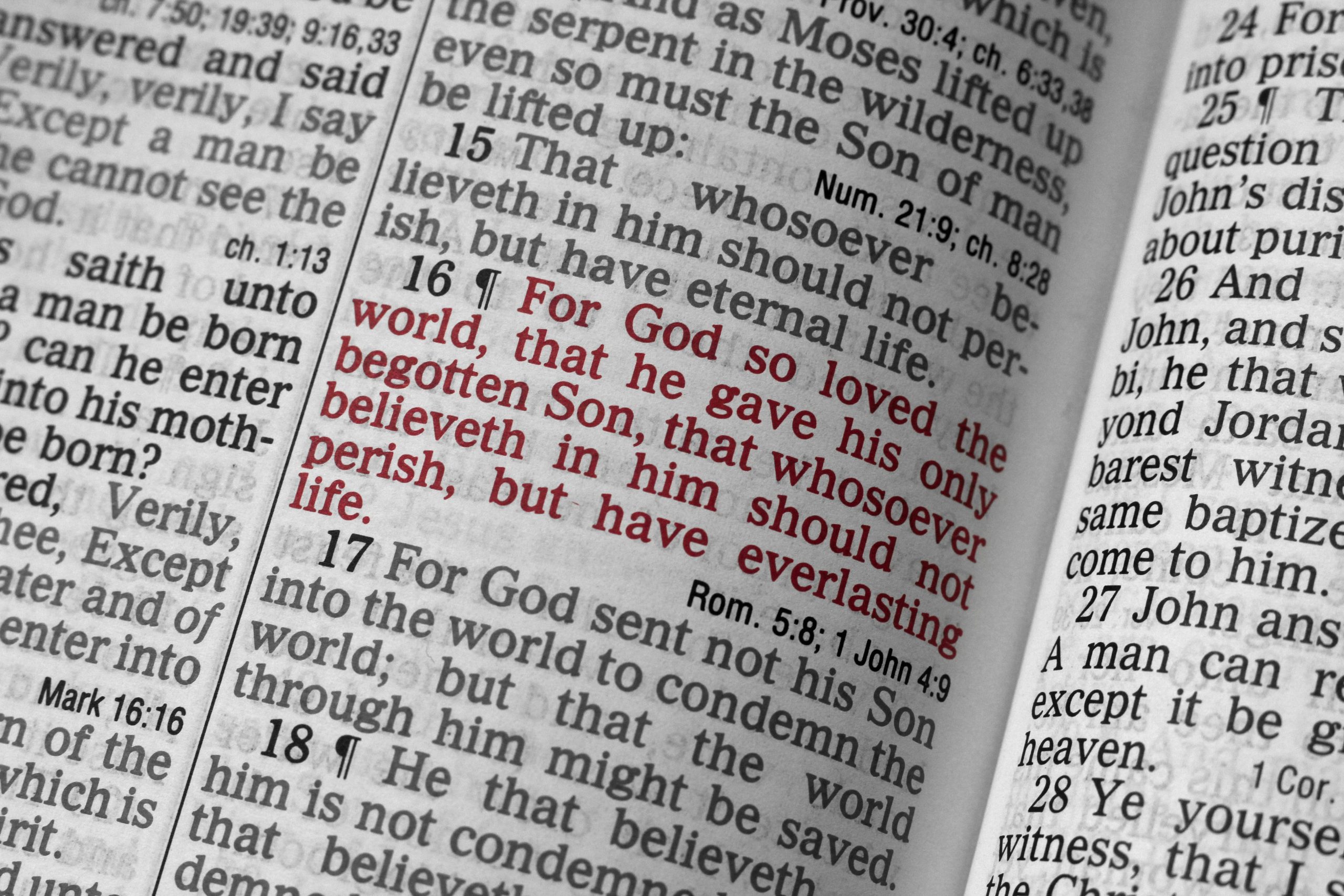
“For God so loved the world that He gave His only Son, that whoever believes in Him should not perish but have eternal life.”

And, wonderfully, Jesus came:

“not to condemn the world, but that the world might be saved through him.”

Saved.

A Saviour sent by a loving Father.

The same God who raised up ‘saviours’ for His people in the days of the Judges has given us the ultimate Saviour—not because we deserve Him, but because of His grace and love.

Let us give thanks for our faithful, compassionate God and for the Good Shepherd who laid down His life for us.

We are saved by grace.

Finding Hope Beyond the Drought

Photo by engin akyurt on Unsplash

Suffolk’s heathland has burnt. Much of England sits under drought conditions. Temperatures have topped 35°C on seven separate days this year – a record that stood since 1976 has now been broken twice over. Families near Dunwich Heath have watched fire crews battle flames close enough to force evacuations. Health authorities now warn that 2026 may bring the highest number of heat-related deaths ever recorded in this country.

Before anything else needs to be said, this needs to be said plainly: real people have lost homes, livelihoods, and in some cases their lives to this summer’s heat. Farmers are watching crops fail. Elderly and vulnerable neighbours are more at risk than most of us will ever fully appreciate. If you are reading this and have been touched by any of it, our sympathy is genuine – nothing that follows is meant to make light of what you have lost.

It would also be dishonest to pretend there is scientific consensus so settled that no reasonable person could question it. Good, thoughtful people disagree about the precise causes, the modelling, and the policy responses to our changing climate. That debate deserves humility on all sides.

But strip away the arguments over mechanism and cause, and something remains that nobody seriously disputes: things are not right. 

Whether through drought, fire, flood, war, or the quieter disasters of illness and loss, we live in a world that regularly outruns our ability to manage it. We build higher sea walls and better early-warning systems, and still the ground cracks and the moorland catches fire. Human ingenuity is real and often admirable – but it has never yet produced a lasting fix for a broken world. Every generation believes it stands one breakthrough away from mastery over creation, and every generation is proven wrong.

This is not a new observation. Scripture has always taken a sober view of what humanity, left to itself, can achieve. “The heart is deceitful above all things” and human plans, however well-intentioned, keep falling short (Jeremiah 17:9). The apostle Paul wrote that creation itself is in “bondage to decay” and groans, waiting for something beyond human effort to set it right (Romans 8:20-22).

That “something” is not a policy or a technology. It is a person. The Bible’s hope has never been that humans will eventually get it together – it is that Jesus Christ will return to establish God’s kingdom on earth, and that under his rule the deserts will bloom, the burning ground will become a pool, and creation will finally be set free (Isaiah 35:1, 7). That is not wishful thinking offered instead of real answers; it is the only answer big enough for a world this fragile.

If this summer has left you unsettled, that unease is worth listening to. It may be pointing you toward a hope that does not depend on us fixing ourselves. 

There’s something brilliant about a World Cup

There’s something brilliant about a World Cup. For a few weeks, the whole thing feels like one big football party. Countries come together, they compete hard, and somehow it all stays peaceful. There are tackles, tension, joy, heartbreak — but it ends properly. Someone wins the cup, everyone knows it, and that’s that.

That’s what makes it feel so unusual. It’s like a little oasis in a world that is otherwise full of mess.

Because when you look beyond football, the picture changes fast. The wars in Ukraine and the Middle East go on and on. No one can point to a final whistle. No one can say, “Right, that’s finished now.” There’s no agreed ending. Just more suffering, more uncertainty, more headlines that never really feel like they belong to the past.

Football shows us what competition can look like when it is kept in bounds. War is what happens when those bounds are gone. And that contrast matters.

Christians have a different kind of hope. We do not believe history is just drifting somewhere without direction. We believe it is going somewhere definite. And there is a moment coming that everybody will have to reckon with. The Bible says, “When Christ, who is your life, appears, then you also will appear with him in glory” (Colossians 3:4).

That’s the real ending.

Not fuzzy. Not partial. Not another ceasefire that might fall apart later. Christ appears. Glory comes. The world is changed. That is the Christian hope, and it is not wishful thinking. It’s a promise.

So yes, enjoy the football. Enjoy the flags, the noise, the skill, the ridiculous emotion of it all. It is good to see nations meet in peace, even if only for a while.

But maybe that is why the World Cup speaks to us. It gives us a small taste of something better. And for Christians, the better thing is not just a tournament that ends well. It is a world finally put right when Christ appears in glory.

That’s the ending worth waiting for

Why Right and Wrong Point Beyond Us

Taking the correct path

Some things aren’t just unpopular or outdated. Some things are just wrong.

Cruelty to children. Betraying a friend. Exploiting the weak. Lying to protect yourself while someone else pays the price. Deep down, we don’t treat these as matters of taste, like preferring tea to coffee. We know they reflect something real.

That is where the moral argument for God begins.
Human beings don’t merely have preferences. We have a sense of obligation. We know there are things we ought to do, even when we don’t want to do them. We ought to tell the truth. We ought to keep promises. We ought to care for the vulnerable. We ought to forgive. We may ignore that voice or bury it under excuses, but we can’t quite silence it.

The question is: where does that “ought” come from?
If the universe is only matter, energy, time, and chance, then morality becomes difficult to explain. Atoms don’t produce duties. Chemicals don’t create commandments. Evolution only gives an explanation why certain behaviours are useful for survival. But “useful” isn’t the same as “right.” A lie may be useful. Revenge may feel satisfying. Selfishness may help me get ahead. But we still know that some things are wrong even when they work.

The moral argument says this: if there are real moral truths, there must be a real moral foundation. If goodness isn’t just a human invention, then it must be grounded in something beyond ourselves. More than that, it must be grounded in someone. Moral laws are not like the law of gravity. They address us personally: telling us what we ought to do, and holding us responsible when we refuse. They command us and challenge us. This points not merely to a force, but to a personal God who is just and has authority.

Of course, this argument is not just comforting. It’s also confronting. If God is the source of moral truth, then we are not free to invent right and wrong for ourselves. We are accountable to Him. The same moral law that condemns cruelty, lies, and injustice also exposes us.
And that is why the moral argument matters. It’s not just a clever proof. It’s a mirror. It shows us that our hunger for justice, goodness, and love is not an accident. It is a signpost.
We don’t live in a silent universe. Our conscience is whispering. The question is whether we are willing to listen.

A Universe Just Right: Why Fine-Tuning Still Amazes Us

Dials Photo by Jonathan Hanna on Unsplash
Photo by Jonathan Hanna on Unsplash

Imagine walking into a room full of dials. Each one controls a part of the universe—gravity, light, the forces that hold atoms together. Every dial is set perfectly. If even one were turned slightly, life would vanish. You’d wonder who set them. That’s how many scientists feel when they study the universe.

The “fine-tuning argument” doesn’t try to prove God. It simply points out how the universe’s basic features seem exactly right for life. The pull of gravity, the strength of the nuclear forces, the mass of a proton—all balanced within incredibly tiny limits. Change any of them just a little, and stars, planets, and people could never exist.

Even scientists with no belief in God often pause at this. The late physicist Steven Weinberg, himself not religious, said how surprising it is that things turned out this way. Fred Hoyle, another unbelieving scientist, once remarked that it looked as if “a super-intellect has monkeyed with physics.”

Of course, not everyone thinks the same. Some people see the fingerprints of a Designer. Others imagine there might be countless universes, and we just happen to live in the rare one that works. But even that idea leaves a question hanging: why should there be any universe at all—let alone one that allows life and thought and wonder?

Perhaps fine-tuning doesn’t give us proof. But it does give us pause. It stirs a sense of awe that the universe is not random chaos but a place beautifully balanced, intelligible, and alive. However you explain it, it’s hard not to feel amazed that the universe seems just right for us to be here noticing it.

A Man With a Withered Hand — and What It Still Says to Us

Mark 3:1–6 (retold for today)

Man with a withered hand

Life can feel hard, tense, and unfair. Power struggles, suspicion, people watching for you to mess up—it’s nothing new. In one short story from the life of Jesus, we see all of that play out in a surprisingly human way.

One Ordinary Day, One Ordinary Man

Jesus walks into a synagogue. It’s not his first time there—Mark tells us he had been there before. That detail matters. He goes back, even though he knows the atmosphere is hostile.

Why return?

Because there’s one man there who needs help.

The man has a withered hand—damaged, useless, probably something he’s lived with for years. In that culture, it would have marked him as weak, flawed, or even spiritually suspect. People like him were often pushed to the margins.

Jesus, however, has a habit of noticing individuals. He doesn’t rush past them in search of bigger crowds or louder applause. Again and again, the stories show him stopping for one person at a time. That’s still oddly comforting, even if you’re not sure what you believe.

Watching, Waiting, Hoping for a Mistake

The room isn’t friendly. Religious leaders are watching Jesus closely—not because they care about the man, but because they want to catch Jesus doing something wrong. Healing on the Sabbath would give them an excuse to accuse him.

So the scene is tense. A vulnerable man. A controversial teacher. A room full of people waiting to see what will happen.

Jesus knows exactly what’s going on. He asks a sharp question: is it better to do good or to do harm? To help someone—or to protect rules at all costs?

No one answers.

Silence can be revealing.

“Come Here”

Then Jesus turns to the man and says, simply, “Come here.”

Imagine what that takes. The man has to step out from the crowd, expose himself, and stand alone in front of everyone. He didn’t ask for attention. He probably spent years trying not to be noticed.

Yet he steps forward.

Whatever you think about Jesus, this moment rings true: change almost always begins with vulnerability. With being seen.

Anger, But Not the Kind You Expect

Jesus looks around the room. The story says he’s angry—but also deeply sad. Not at the man, but at the people who refuse to respond at all. Their hearts are closed, locked tight.

It’s not rage for rage’s sake. It’s the frustration of seeing compassion blocked by stubbornness. Of watching people choose rules over humanity.

That kind of anger still makes sense today.

“Stretch Out Your Hand”

Now comes the strangest part. Jesus tells the man to stretch out his hand—the very thing that doesn’t work.

It’s an invitation to stop hiding. To show what’s broken.

And as the man does, the hand is restored. Not halfway. Not symbolically. Fully. In front of everyone.

What people see isn’t damage anymore, but wholeness.

Whether you read this as miracle, metaphor, or both, the message is clear: healing—real healing—starts when we’re honest about what’s not working.

Two Very Different Reactions

The story ends on a jarring note. The religious leaders don’t celebrate. They don’t reflect. They immediately begin plotting how to get rid of Jesus.

One act of compassion exposes something uncomfortable—and instead of changing, they double down.

That reaction is as human as the miracle itself.

Why This Story Still Matters

You don’t have to be religious to recognise yourself somewhere in this scene.

Maybe you’re the one hiding a weakness. Maybe you’re the one standing silently when someone needs help. Maybe you’re the one stepping forward, unsure but hopeful.

This story suggests that real life—real restoration—doesn’t come from looking perfect or having everything figured out. It comes from honesty, courage, and compassion.

And at the centre of it all is Jesus, inviting people—then and now—to step forward, be seen, and choose life over fear.

Adapted from Mark 3:1–6

Why There’s Something Rather Than Nothing: A Clue Toward God

Watercolour painting of the Earth. MD
Matthew 6:10: “On earth as it is in Heaven”

The Glowing Orb 

Picture walking into a room and finding a glowing orb hovering in mid-air. Your first thought would be, “Why is that there?” No one would just shrug and say, “It just is.” Everything we come across seems to have a story — a reason it exists — some kind of cause or context.

Now zoom out a bit. The whole universe is like that glowing orb, only bigger and more complicated — full of stars, planets, and people sipping coffee while scrolling through blogs like this one. But here’s the strange thing: the universe didn’t have to exist. It had a beginning, and that naturally leads to the question — why is there something rather than nothing at all?

Looking for an Explanation

Everything around us — you, me, oceans, mountains, even puppies — exists, but none of it had to. So what explains it all? You can trace one thing back to another — a tree grows from a seed, a seed from another tree — but at some point, the trail can’t just keep looping forever. There must be some ultimate reason why there’s anything here to begin with, something that doesn’t rely on anything else to exist. Philosophers call it a necessary being. We call Him God.

A Thought Worth Considering

This line of thinking isn’t meant as a tight proof that God exists; it’s more of an invitation to wonder. If we naturally look for explanations behind small things — an odd light in the sky, a knock at the door, a random text at midnight — why would we stop asking when it comes to everything? The idea that the universe has an underlying reason or purpose feels like a thought worth taking seriously. Maybe that quiet sense of order we notice in the world isn’t an illusion, but a clue.

The Woman at the Well: Jesus’ Compassion Beyond Boundaries

A store in the American south – 70 years ago. Two fountains. One labelled “White.” One labelled “Coloured.” A plumbing system engineered to humiliate. Picture Jesus stepping into that store. He doesn’t drift toward the permitted tap; he stands by the forbidden one. A Black woman fills her bottle. He asks, for all to hear: “Would you give me a drink?” The room tightens. Rules snap. Silence holds its breath.

Now rewind to a well in Sychar (John 4:5–9). Only one fountain—yet an invisible sign: “Samaritan” . A woman arrives at noon, alone, keeping shame in the shadows. Jesus sits and says, “Will you give me a drink?”. She flinches: “You’re a Jew—and I’m a Samaritan” . Translation: We don’t share cups. We don’t cross those lines.

Jesus crosses on purpose. Not for provocation—but pursuit. “The Father is looking for worshipers in spirit and truth” (John 4:23-24). God is not waiting for the respectable to wander in; He is searching. He moves through prejudice, through theology, through delay.

Count the taboos broken. He speaks to a woman in public—unthinkable in that culture. He seeks a Samaritan—despised, dismissed, written off. He names her reality—five husbands, and the man she is with is not her husband—then offers “living water” that never runs dry (John 4:10, 14).

She builds the usual walls; we do, too. History: “Your people, my people”. Religion: “Our fathers worshiped on this mountain… you say Jerusalem”. Delay: “I know that Messiah is coming… he will tell us all things”. Jesus will not be managed by our deflections. He does not argue the tribe, relocate to safe doctrine, or accept “tomorrow.” He says, “I who speak to you am the Messiah” (John 4:26). Today.

Come to him, just as you are . Then follow him, just as he is.