In the Footsteps of Paul

In our last instalment we read of the bravery of the early christian preachers and the towns they travelled to.
Unexcavated Derbe

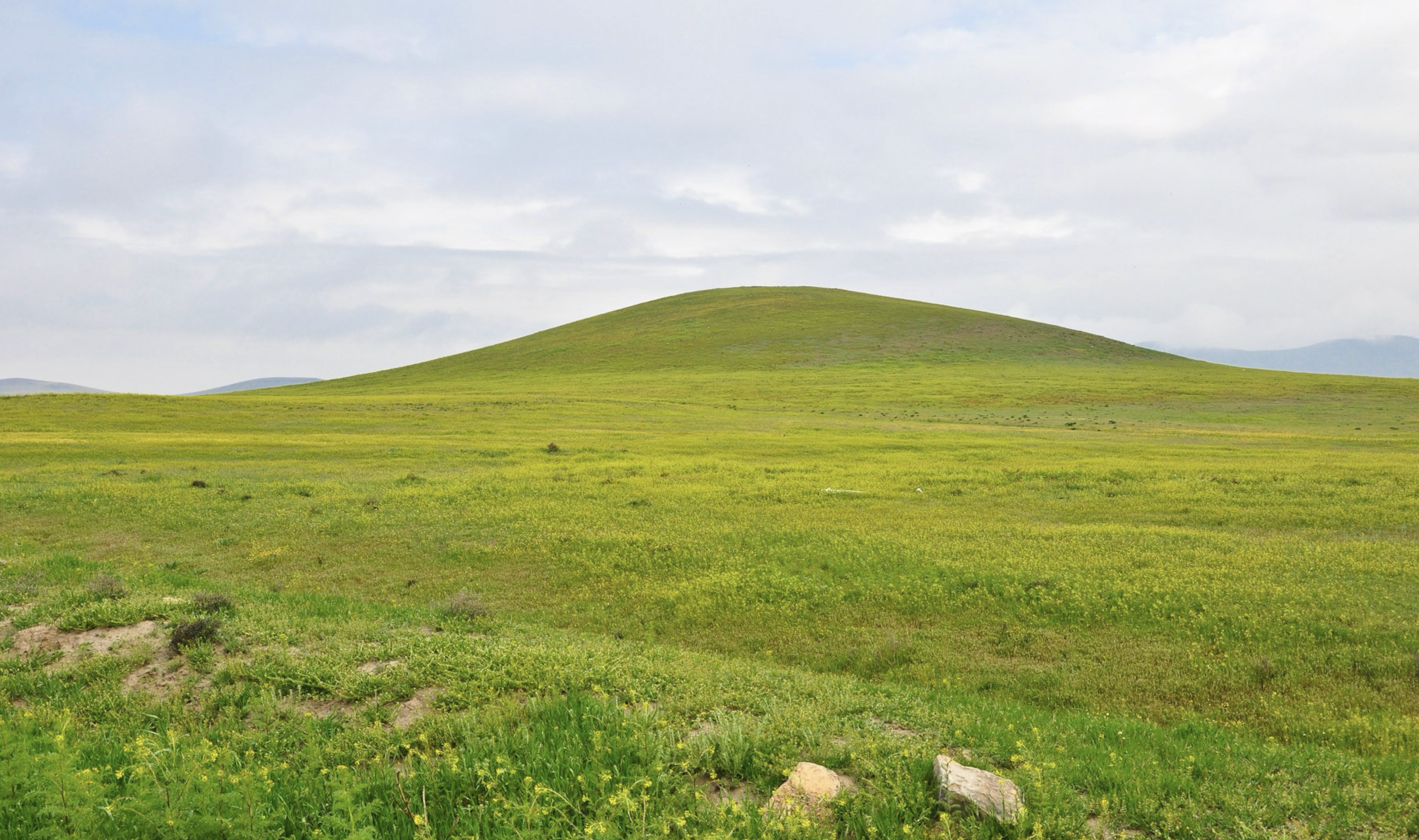
Lystra and Derbe are two of the three unexcavated Christian sites in Turkey but they are still well worth visiting for the thrill the atmosphere gives you in these remote spots. Today in Lystra you can visit a small open-air museum where inscriptions and archaeological fragments lie on the ground. It is good to see that the historical setting of our New Testament is so accurate and visible to us 2,000 years on.

Lystra – modern day Hatunsaray – is in a lush valley about 35k south of Iconium and it had been a Roman colony town for more than 60 years when our friends get there. More than 1000 retired soldiers were given land and the town grew quickly. The bible records a strange incident when Paul and Barnabus arrive. Another event that divides people into believers and haters. We need to think which camp we want to be in. Paul looks into the eyes of a man who has been unable to walk since birth. He sees the man’s faith and he heals him so that the man gets up and walks. What a miracle! The crowds who see this are a superstitious lot and they go a bit wild calling the disciples Zeus and Hermes – Roman pagan gods. Paul immediately tells them to desist and explains again the power of Almighty God the Creator and the Sustainer of all life. And once again this message drives the Jewish population mad and they stone Paul, drag him out of the city and leave him for dead. Thankfully the new believers in Jesus stay around to help him recover and the very next day he leaves and heads to Derbe. What an amazing man he is.

I wonder if Paul thought back to when he was on the ‘other side’ of Christianity? – when he was the one who dragged men and women off to prison, authorised torture and death for these fledgling believers. Perhaps these memories make him ultra aware that he is now the one suffering, taking the beatings and the stonings. He infamously stood by when the faithful disciple Stephen was killed by the mob. There is perhaps no-one else in the bible who had such an amazing turn around in his life from hater to lover than Paul. His new life sends a wonderful message to us that there is always a way back to faith and forgiveness when we turn around and look to God. All these thoughts might have occupied his mind while he is chased out of yet another city, fearing for his life.

Bruised and battered from the stones and the kickings, he and Barnabus head to their next destination. Derbe is today a dry and dusty mound. You can climb up to the top and walk around the scrubby ground and find pottery shards and glass fragments scattered everywhere. You can seem for miles across the plains. When Paul was there Derbe was a frontier town and he visited it three times on his various journeys (Acts 14, 16, 20). One of Paul’s companions on a trip was a man called Gaius and he was a trusted friend who lived in Derbe. Paul gave him the commission to take the collection that had been raised to help the poor Christians back in Jerusalem. Gaius was obviously a devout disciple and one whom Paul knew would be best placed to disperse the funds back in Israel. Derbe turns out to be a happier town for our friends. Acts 14 v 21 says, “They preached the gospel in that city and won a large number of disciples.” Today there is also a stone inscription in a local museum, from a few centuries later, which reads “the most God-loving Michael, bishop of Derbe”. A town of faithful believers.
In the Footsteps of Paul

In the article on 16 May 2024 we noted that Ramsay found something amazing at Antioch in Pisidia.

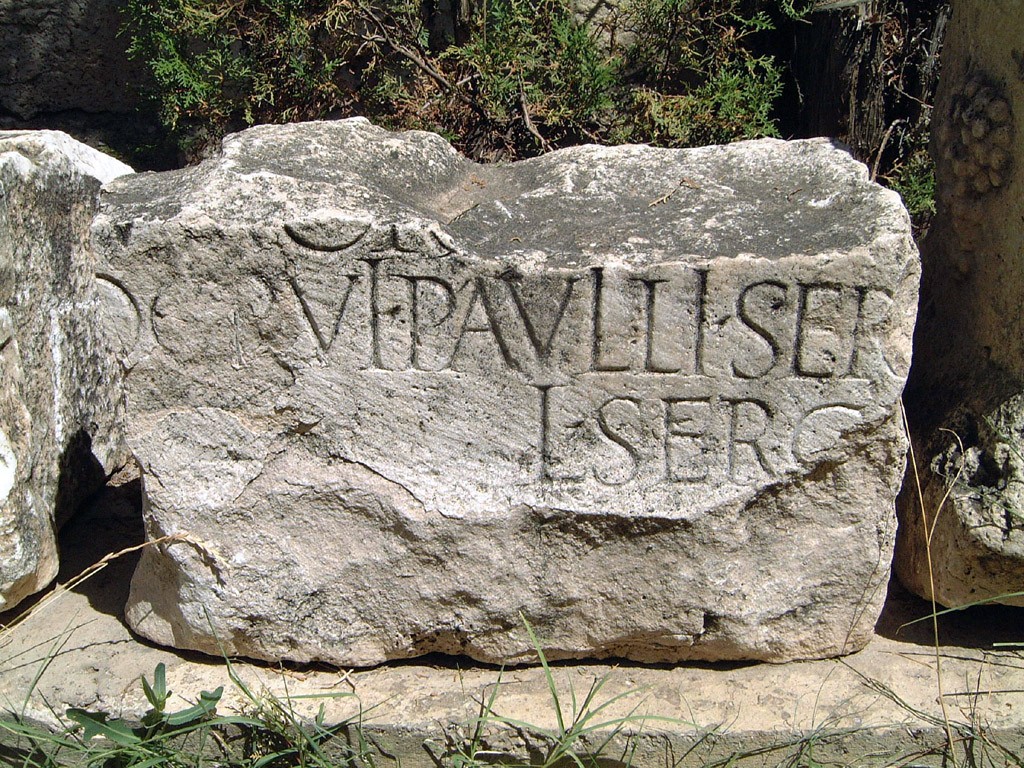
Ramsey was excavating in Antioch in 1912 and came across Latin inscriptions detailing names of the son and the daughter of Sergius Paulus. Serguis Paullus filio and Sergio Paulla. The daughter is married to an influential Roman working for the Emperor. They were a prominent family of senators, wealthy and well-connected citizens of this Roman colony town. Pisidian Antioch was the home town of our proconsul currently serving in the army on Cyprus. His family were large landowners, influential and powerful all around that region. So perhaps we can surmise that our new joyful convert begs Paul not to delay on the coast but to go straight north to speak to his children and wider family about Jesus. And so that’s exactly what Paul does! 

Photo: Sergius Paullus inscription in Yalvac (modern day Antioch in Pisidia) museum

How does he get on when he arrives? Not at all well, sadly …..

Antioch was a city set 900m above sea level, high in the hills, famous as a spa town, colonised by the Roman army and prosperous. We hope that Sergius Paulus’ wider family became believers, but the local Jewish population was not so receptive. And within a week or two Paul and his friend Barnabus were expelled and chased out of the city, running for their lives. Even with the first hand testimony of witnesses to Jesus’ life, death and resurrection, not everyone was convinced. The Jews in the city see this new Christianity as a threat to their traditions and influence and they are not happy. And scared people often resort to violence when their arguments are weak.

We see that today in our world too.  As his custom was, the apostle Paul goes to the synagogue in Antioch and preaches about Jesus. He lays out the history of the Jewish people and how they had prophets and kings and signs from God to tell them of the coming of the Messiah. But they didn’t want him when he came and they hung Jesus on the cross.

Paul tells them God raised him from the dead and from that moment on the new world began. The plan and purpose of God was now open to non-Jews – everyone who follows Jesus will be in God’s new family. This was not a message the powerful men in Antioch wanted to hear and they resorted to violence and intimidation and drove Paul and Barnabus out of the city.

The pair went first to Iconium – modern day Konya – and again got a very mixed reaction. Lots of new believers and lots of haters. Pretty much like our world today with its reaction to Jesus and his commandments and teachings. The duo heard that there was a plan afoot to kill them by stoning and so yet again they fled again. They walked hurriedly across the hills to two smaller towns -Lystra and Derby – and, undaunted by the threats of death, they preached about Jesus (Acts 14:6). Their faith and confidence in God is amazing – wouldn’t you love to be so bold! To be unafraid in a world that is now so dismissive of faith and belief.

See you again next time…..

In the Footsteps of Paul

Back to the blue skies of Turkey….

Why the rush to Pisidian Antioch? Well, we mentioned last time that Paul had sailed from Paphos in Cyprus. Acts 13 tells us that the chief Roman proconsul on the island was a man named Sergius Paulus. He hears Paul teaching about the resurrection of Jesus and becomes a Christian believer. If you become a follower of Jesus, the first thing you want to do is tell others – especially your family – about this amazing change in your life. What’s a recent convert on Cyprus got to do with a Roman colony town in the middle of the Turkish mountains?

It took another 1,866 years for a possible explanation to be dug up! The end of the 19th century produced a long line of European archaeologists who found rich sites to excavate all over the Middle and Near East.

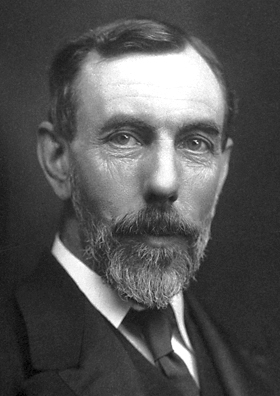
William Ramsey was a Scottish archaeologist and Crown-appointed university scholar. He was raised an atheist and one goal in his work was to refute the bible and its claims. But as he worked he discovered more and more facts that confirmed the accuracy of the scriptures. He stunned the intellectual world of his day by converting to Christianity and said that the narrative of Paul’s travels rests on first-class authority. Ramsey is still considered the finest authority in the world on the history of Asia Minor – a brilliant mind; convinced that the bible was true. He believed that the Bible should be accepted as the word of God because of the evidence of his explorations and discoveries.  Next time let’s look at one of the remarkable inscriptions discovered here.

William Ramsey

Following in the footsteps of Paul

Would you like to leave the chilly winter weather behind and come for a walk in the sunshine, following in the footsteps of the apostle Paul? Stepping out beside him as he travels around Turkey preaching the good news about Jesus? Well you can do that here, walking sections of The St Paul Trail – a waymarked hike that tries to imagine the route Paul might have taken when the gospel first arrived in mainland Asia Minor.

There is a good reason for our journey. One other than suns rays instead of the frosty British winter weather outside your window! This hike makes the scriptures come to life in bright colour and detail. Facts and figures, archeology and history won’t in themselves make you believe the bible story. It requires faith and trust to get to know God and His son, the Lord Jesus, for yourself. But it is reassuring to know that the historic details of the time in which the bible was written are verifiable and accurate. Events in our Bibles can be laid alongside secular accounts of the time and found to be absolutely trustworthy. 

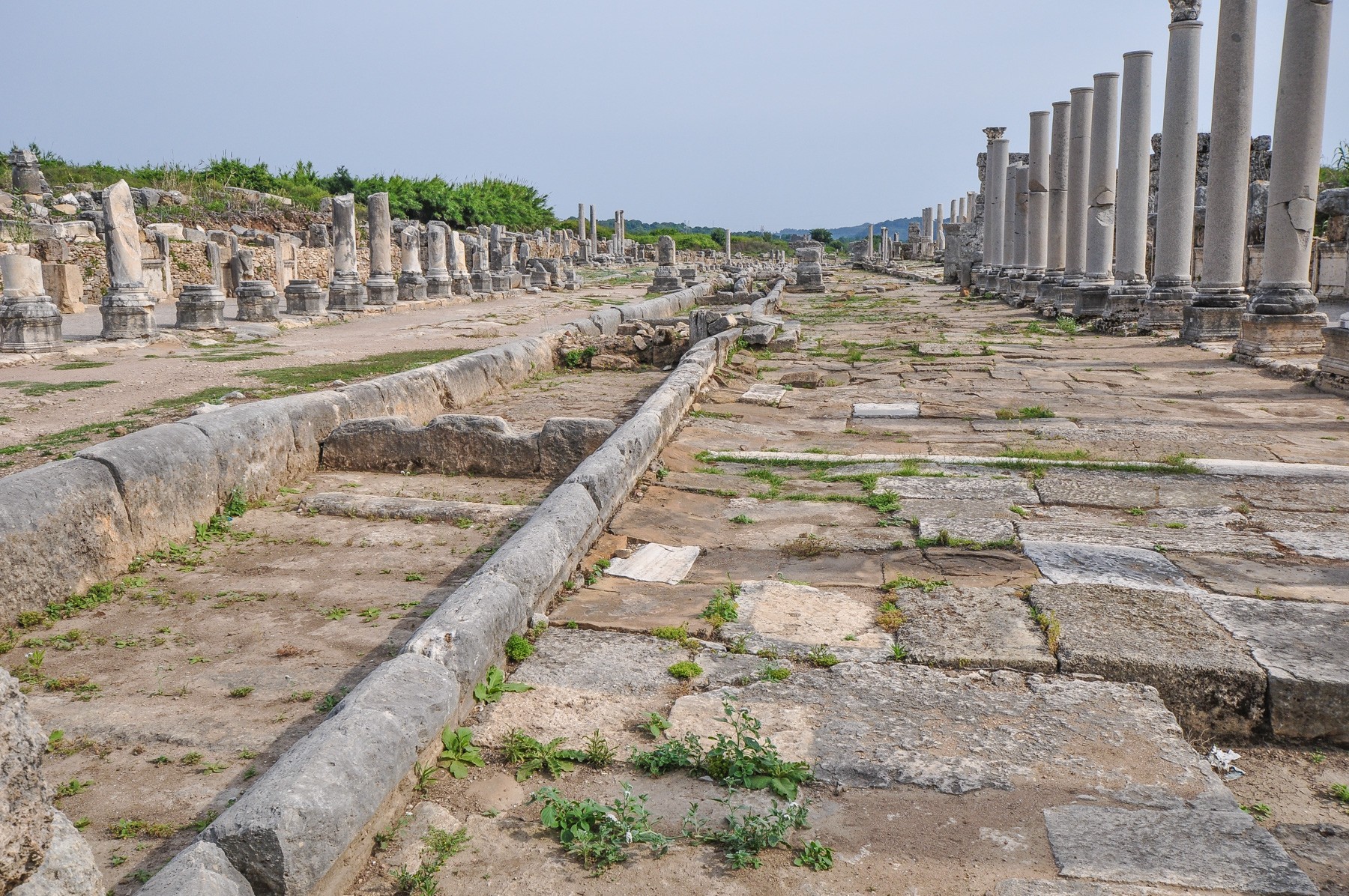
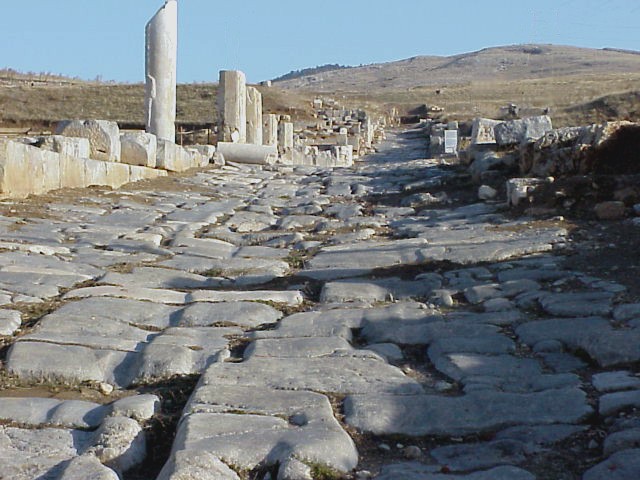
The street Paul travelled.

Paul was the man who brought the message of Jesus to the expanding world of the Roman Empire. In the New Testament book of Acts we can read of the long challenging days and the many miles he covered – no doubt speaking to everyone along the way about this new religion that had changed his life completely. Today you can follow the waymarked St Paul Trail route from Perge to Antioch. The whole walk is 500 km long and the author of the map book says this is wild country! Undoubtedly it was even more so in Paul’s time. Rivers, canyons, white water torrents, thick forests and steep cliffs meant that there was no natural route. Bits of Roman road had been built – the new Via Sebaste – but most of the way ahead was still sheep and goat paths, rocky and overgrown. We’ll begin a few steps of Paul’s journey in the next post…

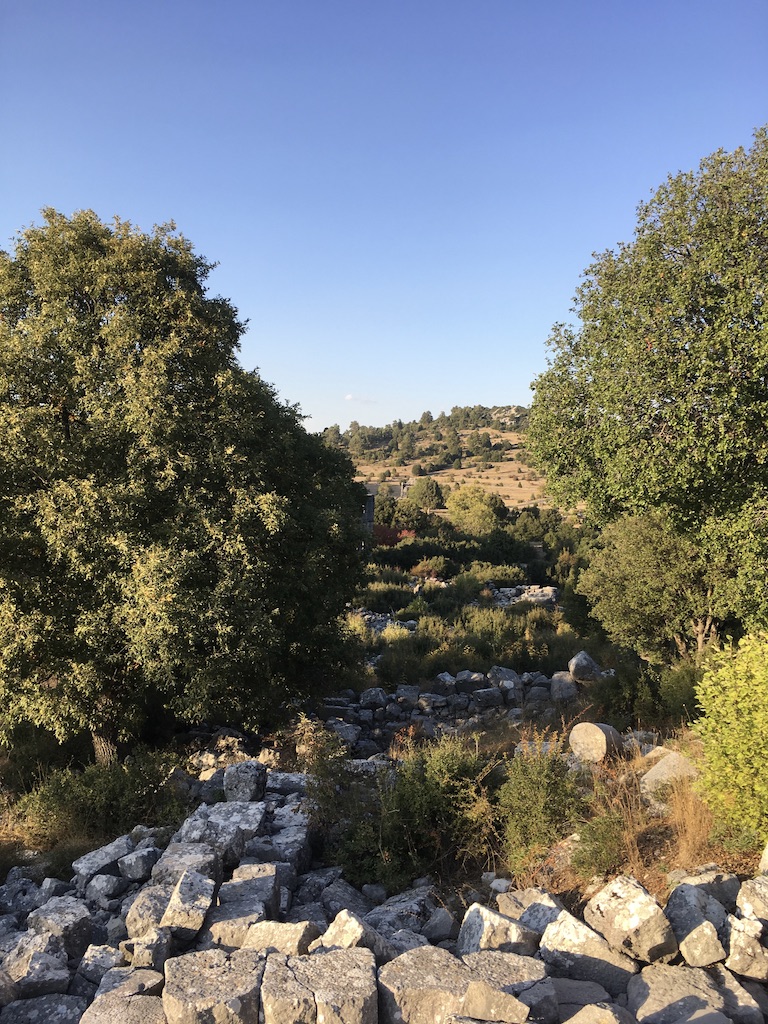
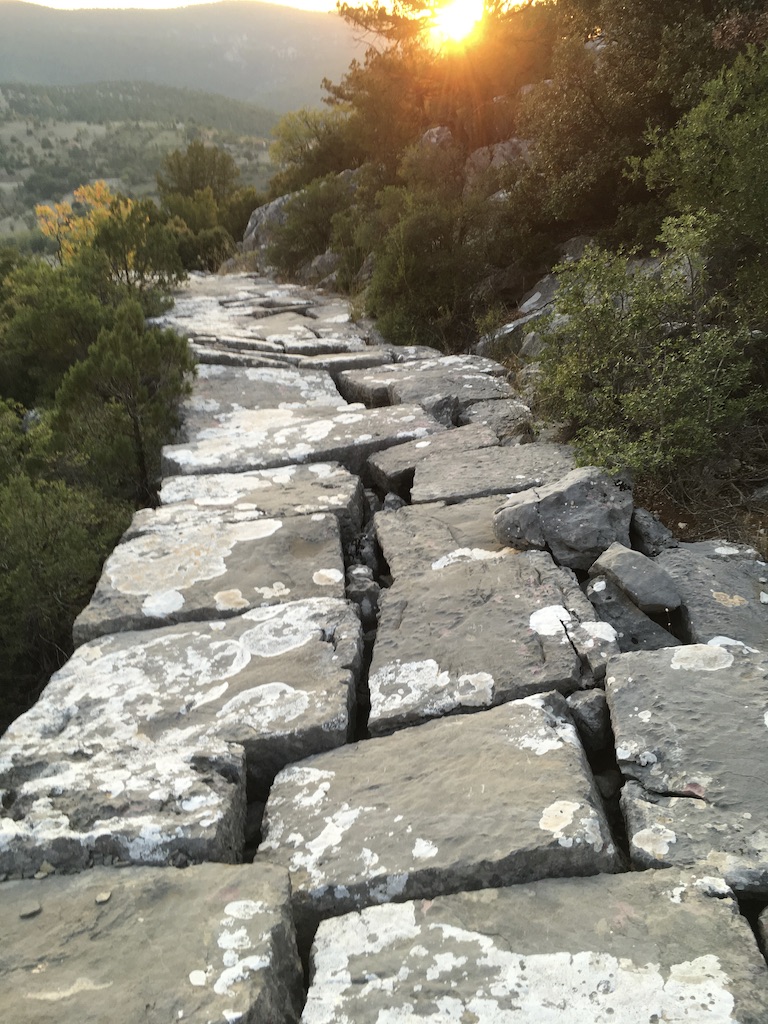
The street today at Perge, a rocky section of the trail and a stunning bit of roman road