The Interruption You Didn’t Schedule

Tuesday will look a lot like Monday. Next year will look a lot like this one too. Most of us live like that. We assume life will stay as it is. Usually it does. That is where the trouble hides.

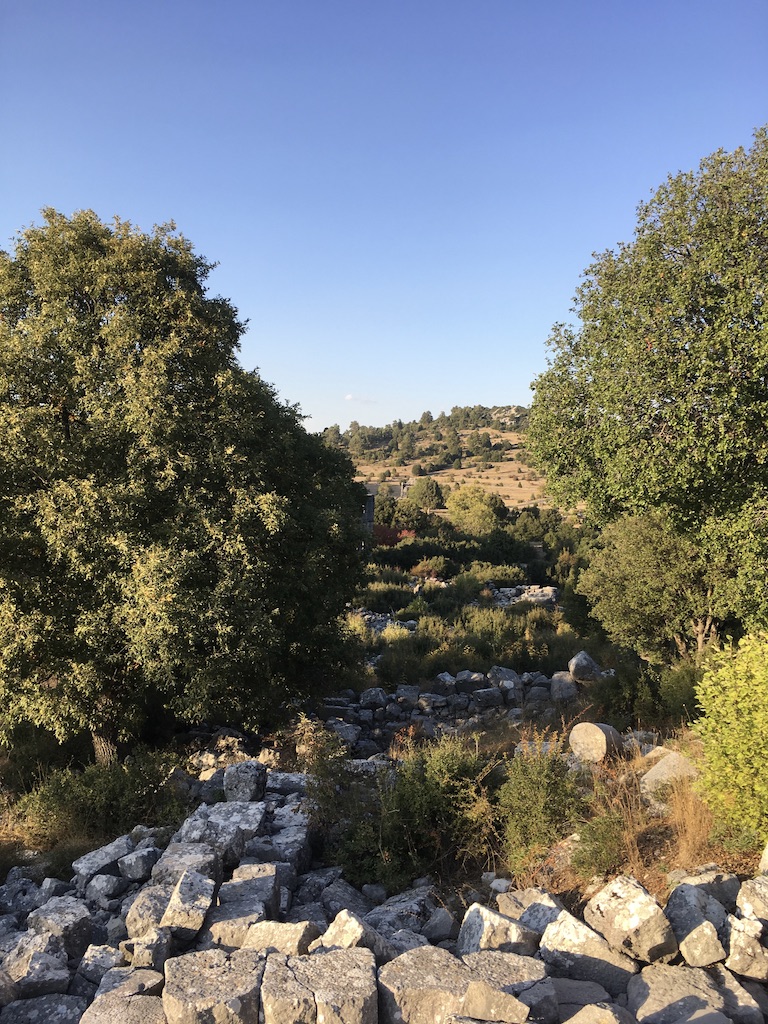
Photo by Marija Zaric on Unsplash

Acts 10 tells the story of Cornelius, a Roman officer. He had a good life. He was generous. He was devout. He was well liked at home. The Bible speaks well of him too. That makes what happens next surprising.

He doesn’t get praise. He gets interrupted.

It is three in the afternoon, the hour of prayer. A familiar part of the day. Then something breaks in. He is told to send for Peter, a fisherman he has never met. It makes no sense. And the message is plain: Cornelius is missing something.

Read the chapter and a pattern of interruption stands out. An angel interrupts Cornelius at prayer. A vision interrupts Peter at lunch. Messengers interrupt Peter while he is still thinking about the vision. Then Peter is interrupted again in the middle of speaking. Four interruptions. None of them convenient. All of them kind.

Here is the uncomfortable bit: a well-run life is hard to interrupt.

If your days are chaos, you expect change. But if life is working — a career, a routine, a settled set of views — you want to keep it going. Every hour is spoken for. Every question already has an answer. That is not always arrogance. Sometimes you are just busy, and life feels fine.

And notice this: Cornelius was not resisting anything. He was praying. It was habit. He was not expecting interruption.

Most of us are closer to that than we want to admit. We don’t reject a new way of life. We just never leave room for it.

An uninterruptible life does keep us safe, in a way. Safe from being wrong in a way that changes us. Safe from having to let go of a grudge. Safe from facing that two-in-the-morning ache of anxiety, because managing it feels easier than letting anything heal it.

But that’s not peace. It is a stalemate. And God loves us too much to leave us there.
Look who does the interrupting. Cornelius would never have thought of sending for Peter. Peter would have called the whole thing out of the question. Neither of them planned it. Both ended up somewhere neither could have reached alone.

The initiative was never theirs. It was God’s. That is how new life begins. Not with us improving. With him coming in. At the end of the chapter Peter says they killed Jesus, hung him on a cross. Finished. Buried. But God raised him to life on the third day.

Two small words: but God. Not you tried harder. God acted. Paul says that while we were still sinners, God showed his love for us (Romans 5:8). He tells the Ephesians, “But God, rich in mercy, made us alive” (Ephesians 2:4-5). Grace is always like that. It arrives before we think to ask.

So the question is not whether you are a good person. Cornelius was. The question is simpler: are you still reachable by a God who wants to give you more than you have settled for?

Perhaps something in you feels unsettled. A discomfort you cannot quite file away. A quiet sense that life is respectable but still hollow. Every instinct says tidy it up. Get back to the routine. Prove everything is fine.

Don’t. That may well be Him, and He is not coming to scold you.

Cornelius could have finished his prayers and died admired by those who knew him – and unchanged. Instead he sent for the man. He left the routine open long enough for Christ to walk in.

Hope rarely knocks politely. God interrupted a good man’s prayers to give him Jesus.
Let him interrupt yours.

Lessons from Judges 2

A challenging book

The book of the Judges can be difficult to understand. Its stories contain violence, murder and bloodshed, and some of its accounts are particularly challenging.

The book ends with the words:

“In those days there was no king in Israel; every man did what was right in his own eyes.”
Judges 21:25

What can we learn about God from this difficult book, and particularly from chapter 2?

God is faithful

In verse 1, God says:

“I will never break my covenant with you.”

Human promises can be unreliable, but God’s promises are not. He is constant, faithful and trustworthy.

Yet God also warns Israel about the consequences of disobedience. They were told not to make covenants with the people of the land and to destroy their altars. They were to remove the temptation, because these things would become “thorns” and “snares”.

There is a lesson here for us. What are the “thorns” and “snares” in our own lives? Is there anything to which we have become too attached? Is something becoming more important than our relationship with God?

Sometimes we need not simply to resist temptation, but to remove it.

Saved by grace

Judges tells us that the generation who served the Lord eventually died, and a new generation arose who “did not know the Lord”.

Israel had been commanded to teach their children about God, but somehow that faith had not been passed on.

Yet the earlier generation is still described as serving God, despite their failures. They wept when their disobedience was exposed and turned back to Him.

We are reminded that we cannot earn our salvation. We are saved by grace.

The next generation, however, turned to the Baal, Baal was the name used for a number of Canaanite gods associated particularly with fertility, rain, crops and prosperity. Verse 12 says they:

  • forsook God;
  • followed other gods;
  • bowed down to them; and
  • provoked God to anger.

A God who saves

God’s anger was kindled, and the people experienced great distress.

But what happens next is remarkable.

Verse 16 says:

“Then the Lord raised up judges, who saved them out of the hand of those who plundered them.”

These were people who had turned away from God. Yet He saved them.

And when they turned away again, He continued to respond with compassion.

Verse 18 says:

“For the Lord was moved to pity by their groaning.”

What an extraordinary picture of God.

He is not a God who is easily angered. His compassion is greater than our failures. He sees people in distress and is moved to act.

The Good Shepherd

We see exactly the same with Jesus. He is not easily angered, he is in fact only once described as being angry (Mark 3 v 5) but on many occasions he is described as being full of compassion.

In Mark 1:40–41, a man with leprosy comes to Jesus in great distress. Jesus is “moved with pity”, reaches out and touches him, and he is made clean.

Later, in Mark 6:34, Jesus sees a great crowd and has compassion on them because they are:

“like sheep without a shepherd.”

That description could equally apply to the people in Judges—and perhaps to many people today.

And so when we focus on the Good Shepherd, we see the one who lays down His life for His flock.

Not because we deserve it.

Not because we have earned it.

But because of His love.

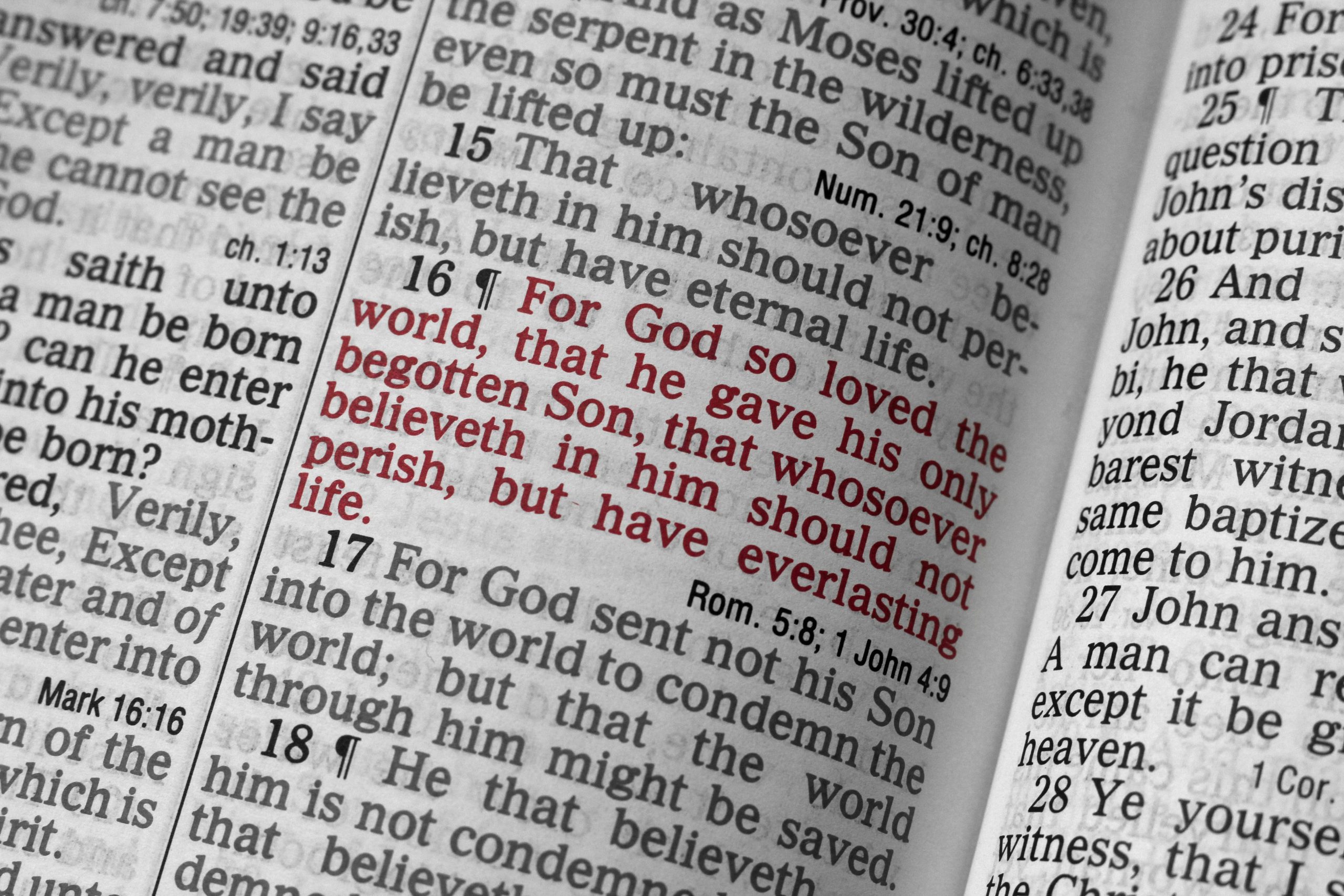
“For God so loved the world that He gave His only Son, that whoever believes in Him should not perish but have eternal life.”

And, wonderfully, Jesus came:

“not to condemn the world, but that the world might be saved through him.”

Saved.

A Saviour sent by a loving Father.

The same God who raised up ‘saviours’ for His people in the days of the Judges has given us the ultimate Saviour—not because we deserve Him, but because of His grace and love.

Let us give thanks for our faithful, compassionate God and for the Good Shepherd who laid down His life for us.

We are saved by grace.

Inspired by God’s word

Recently I shared some pictures illustrating the Lord’s prayer.  There was some very kind feedback, so I wanted to share another inspirational Bible passage, which is Psalm 23.  This is a firm favourite at church services, either read from the Bible or sung as the hymn based on the words of the psalm.  The photographs were chosen to illustrate different phrases.  I wonder what pictures come to your mind ?

The Lord is my shepherd, I lack nothing.  He makes me lie down in green pastures,

he leads me beside quiet waters, he refreshes my soul.  He guides me along the right paths for his name’s sake. 

Even though I walk through the darkest valley, I will fear no evil, for you are with me; your rod and your staff, they comfort me.

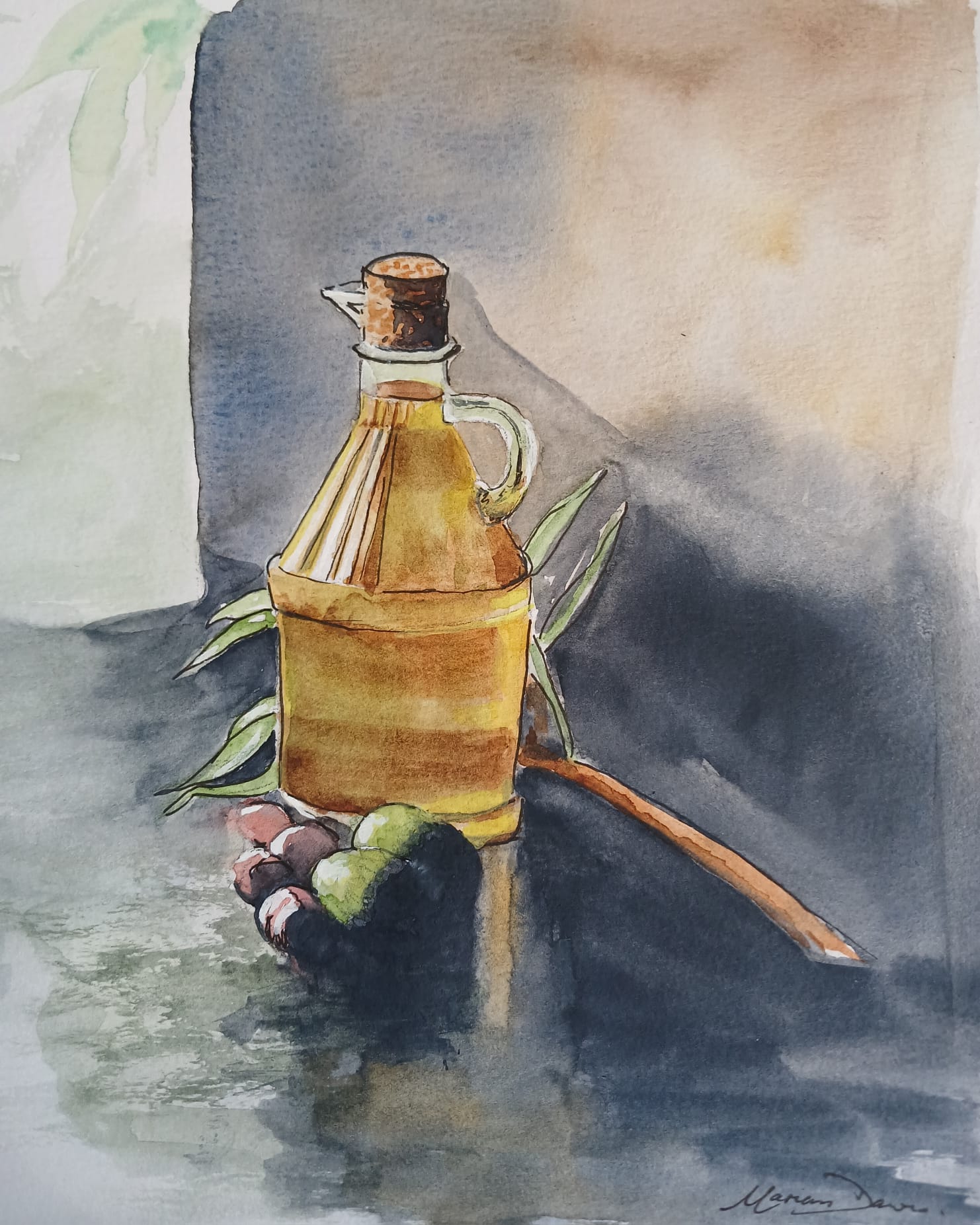
You prepare a table before me in the presence of my enemies.  You anoint my head with oil; my cup overflows.

Surely your goodness and love will follow me all the days of my life, and I will dwell in the house of the Lord forever.

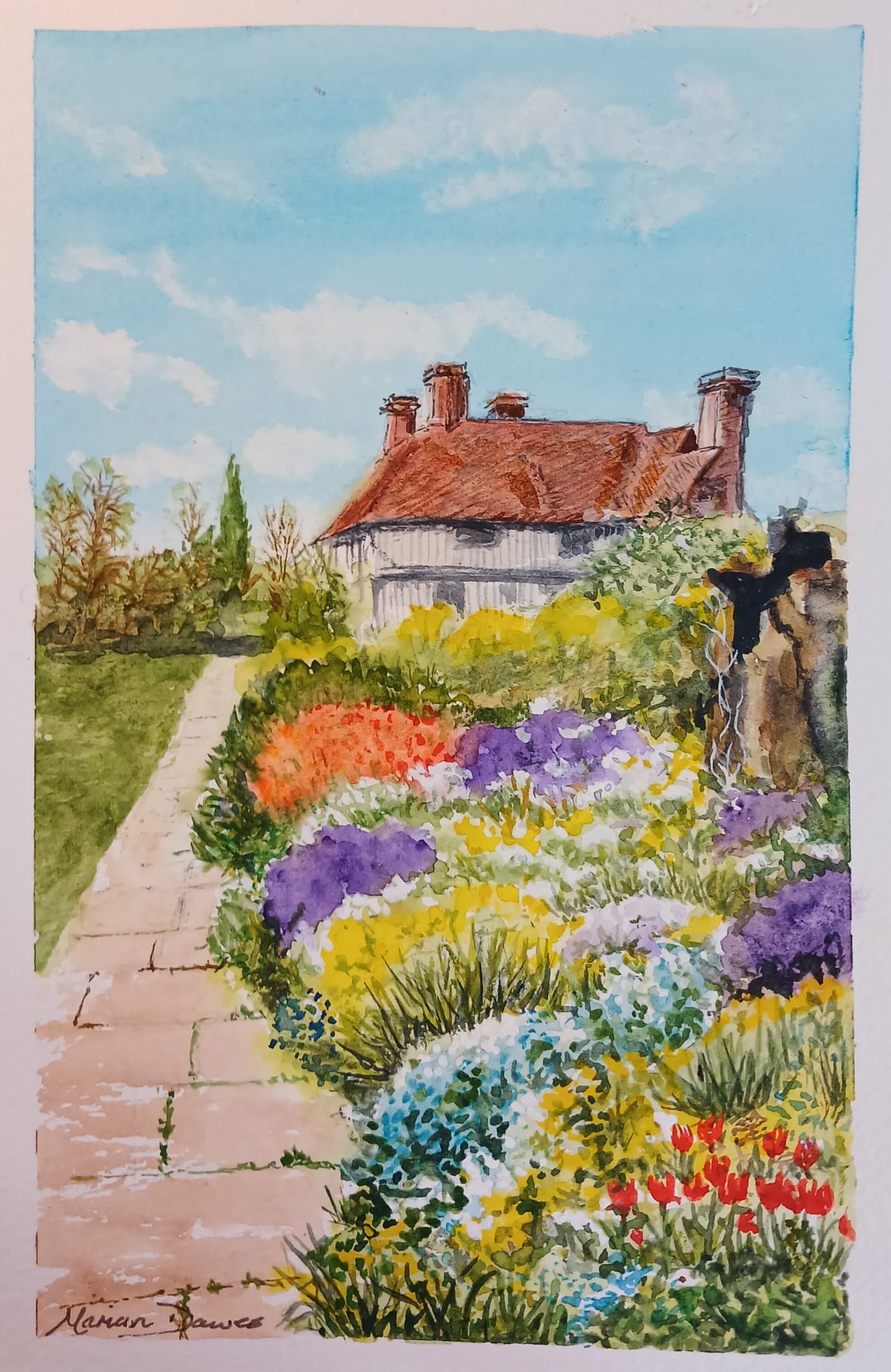
And here are a handful of the paintings that were produced as a result of sharing these verses and pictures. 

Bible references: New International Version

Images from Unsplash.com :
Sheep on hillside with sunset: Jaka Škrlep
Still waters: Jenn Wood
Dark Valley: Karsten Wurth
Hands: Ave Calvar
Table: Kevin Schmid
Oil: Roberta Sorge
Overflowing cup: Ephraim Mayrena
Daisies: Garston Roulstone
Scottish Lake: Gary Ellis

Images from Pexels.com:
Shepherds Staff: Photo by Mehmet Has

Images from other sources:
Green pastures: Sally Taylor

In the Footsteps of Paul

In the article on 16 May 2024 we noted that Ramsay found something amazing at Antioch in Pisidia.

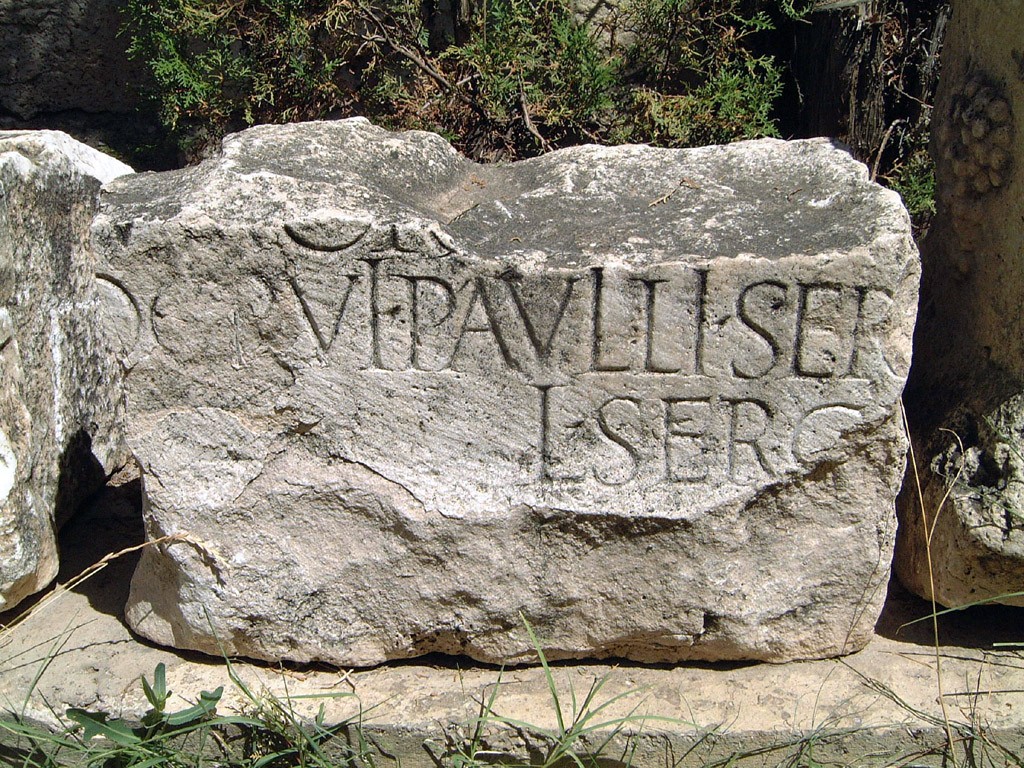
Ramsey was excavating in Antioch in 1912 and came across Latin inscriptions detailing names of the son and the daughter of Sergius Paulus. Serguis Paullus filio and Sergio Paulla. The daughter is married to an influential Roman working for the Emperor. They were a prominent family of senators, wealthy and well-connected citizens of this Roman colony town. Pisidian Antioch was the home town of our proconsul currently serving in the army on Cyprus. His family were large landowners, influential and powerful all around that region. So perhaps we can surmise that our new joyful convert begs Paul not to delay on the coast but to go straight north to speak to his children and wider family about Jesus. And so that’s exactly what Paul does! 

Photo: Sergius Paullus inscription in Yalvac (modern day Antioch in Pisidia) museum

How does he get on when he arrives? Not at all well, sadly …..

Antioch was a city set 900m above sea level, high in the hills, famous as a spa town, colonised by the Roman army and prosperous. We hope that Sergius Paulus’ wider family became believers, but the local Jewish population was not so receptive. And within a week or two Paul and his friend Barnabus were expelled and chased out of the city, running for their lives. Even with the first hand testimony of witnesses to Jesus’ life, death and resurrection, not everyone was convinced. The Jews in the city see this new Christianity as a threat to their traditions and influence and they are not happy. And scared people often resort to violence when their arguments are weak.

We see that today in our world too.  As his custom was, the apostle Paul goes to the synagogue in Antioch and preaches about Jesus. He lays out the history of the Jewish people and how they had prophets and kings and signs from God to tell them of the coming of the Messiah. But they didn’t want him when he came and they hung Jesus on the cross.

Paul tells them God raised him from the dead and from that moment on the new world began. The plan and purpose of God was now open to non-Jews – everyone who follows Jesus will be in God’s new family. This was not a message the powerful men in Antioch wanted to hear and they resorted to violence and intimidation and drove Paul and Barnabus out of the city.

The pair went first to Iconium – modern day Konya – and again got a very mixed reaction. Lots of new believers and lots of haters. Pretty much like our world today with its reaction to Jesus and his commandments and teachings. The duo heard that there was a plan afoot to kill them by stoning and so yet again they fled again. They walked hurriedly across the hills to two smaller towns -Lystra and Derby – and, undaunted by the threats of death, they preached about Jesus (Acts 14:6). Their faith and confidence in God is amazing – wouldn’t you love to be so bold! To be unafraid in a world that is now so dismissive of faith and belief.

See you again next time…..

Olympic Sports in the Bible

The modern Olympic Games are a revival of the Ancient games which were hosted on the plains of Olympia in Greece, as part of a pagan festival.  People in Bible times were aware of these games and others like them, and there are references to these sports in the Bible.

The apostle Paul was born approximately AD 0-10, so the games would be a regular feature during his lifetime.  It is believed that he referred to these athletic games in 1 Corinthians chapter 9 verse 25 when he wrote “Everyone who competes in the games goes into strict training.”  All the participants had to exercise self-restraint in order to win the prize.  That might be constraints over leisure time; training rather than spending time with friends, or constraints in their diet; eating healthy, energy giving food rather than the things they perhaps enjoyed and preferred more.

Games were also held in Corinth every two years (the year before and after the Olympic games) and involved similar events.  The Christian believers at Corinth would be very familiar with the concept of an athlete from these games and it was a good example for Paul to use.  In 1 Corinthians chapter 9 verse 24 he began by saying “Do you not know that in a race all the runners run, but only one gets the prize ?  Run in such a way as to get the prize.”  Paul was likening the Christian journey through life, to a race, with Jesus’ followers as the athletes.  The athletes at the games had to have self-restraint and dedication to achieve their best.  In the same way, the follower of Christ has to exercise self-restraint in the way they lead their life and show dedication to Jesus.

The prize that the athletes won at the Ancient games was an olive wreath crown that would soon decay.  The prize that Christians are striving for will last forever, that is, they will receive immortality.  Christians try to live their lives doing what God wants of them.  In the Olympics only one person can win an event, but in this race, the prize is available to anyone who wants it and strives for it.

In another of his letters to the early Christian church, Hebrews chapter 12 verse 1, Paul advises “let us run with perseverance the race marked out for us”.  Perseverance means endurance and constancy.  Therefore it is a long race which requires continual effort and stamina over the course of a lifetime.  There is guidance provided throughout the Bible to help us with this.  Take a look at it and find out how the prize of immortal life can be yours too.

Following in the footsteps of Paul

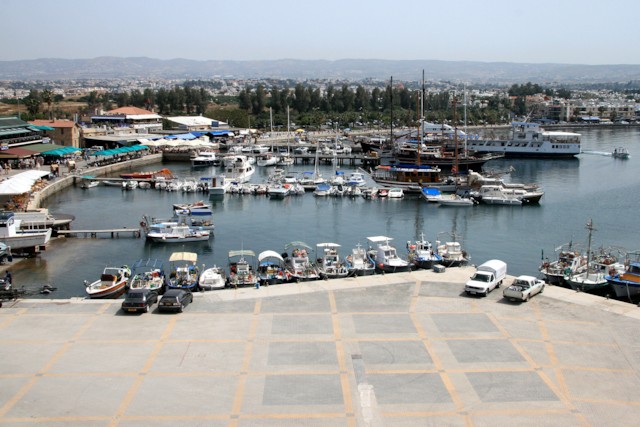
Modern day Paphos

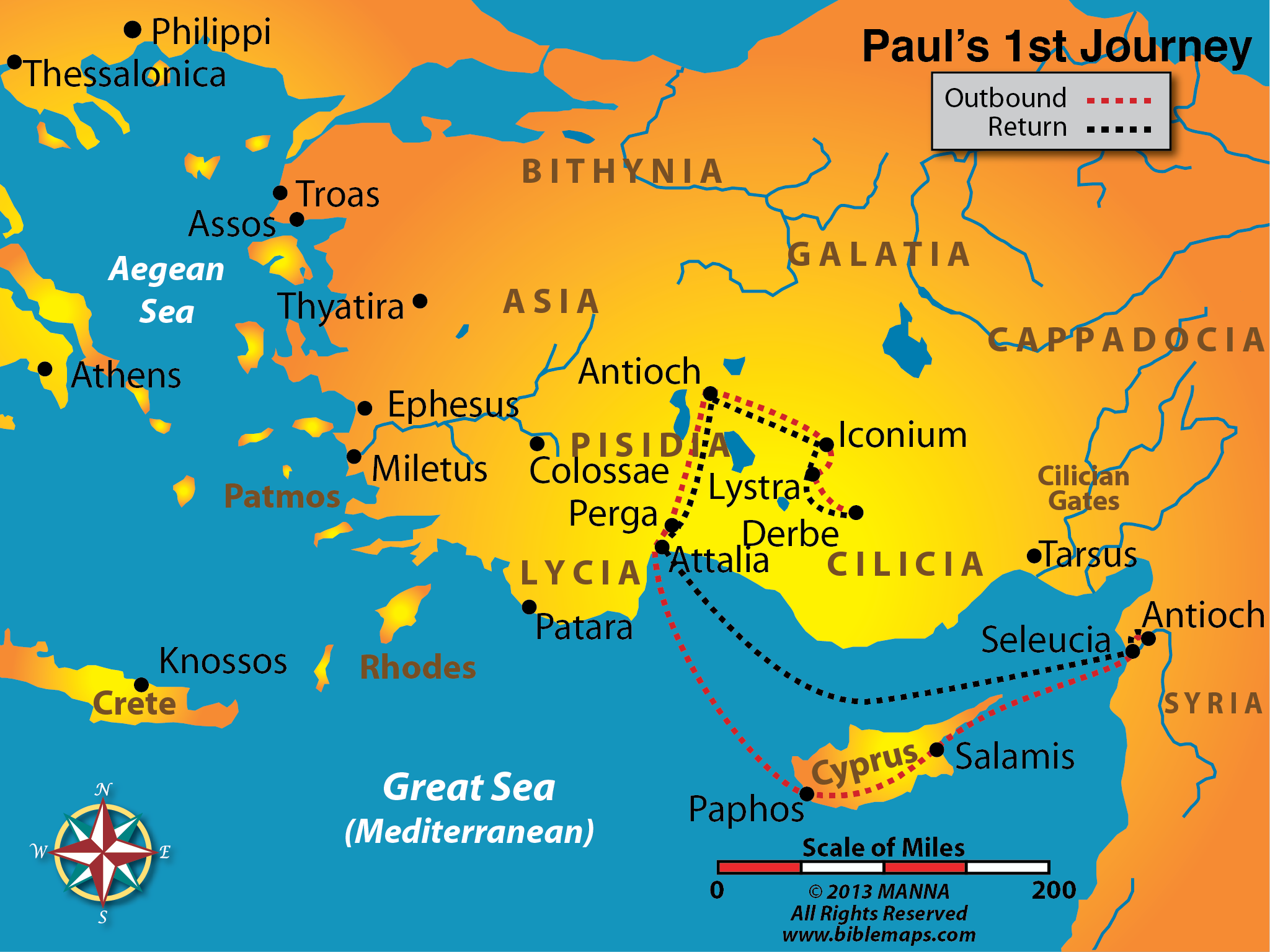
Leave the English winter and head back out into the sunshine… Paul and two friends arrive by boat from Cyprus at the end of a long hot summer in AD 46. Acts 13 says they sailed from Paphos and came ashore in coastal Pamphyllia.

The narrative tells us that the companions land at Perge – their landing port has long silted up and the nearest harbour is now Antalya in modern Turkey. You might think that after a few sea voyages (it had already been a long Mediterranean trip from Syria to arrive at Salamis in Cyprus) the trio would want to spend a bit of down time at the seaside. Here it would be easy to find a ready audience for this new religion in the hustle and bustle of the fishing port. Perge was a transport hub for boats with traders from all over the Mediterranean so there would have been no shortage of interesting folk to talk to.

But no, we are told in Acts 13 v 14 that Paul wants to head off north, on a dangerous journey, almost straight away. He has set his heart on walking over the mountains to Antioch – over 200 kilometres inland from the coast. Antioch – modern day Yalvac – was a fairly recently established Roman colony town set high in the mountains. Why was Paul so keen to get to Antioch? Why not just stay enjoy the beach and talk to the cosmopolitan folk in town? These mountains are wild and dangerous ….. find out more soon…….

Following in the footsteps of Paul

Would you like to leave the chilly winter weather behind and come for a walk in the sunshine, following in the footsteps of the apostle Paul? Stepping out beside him as he travels around Turkey preaching the good news about Jesus? Well you can do that here, walking sections of The St Paul Trail – a waymarked hike that tries to imagine the route Paul might have taken when the gospel first arrived in mainland Asia Minor.

There is a good reason for our journey. One other than suns rays instead of the frosty British winter weather outside your window! This hike makes the scriptures come to life in bright colour and detail. Facts and figures, archeology and history won’t in themselves make you believe the bible story. It requires faith and trust to get to know God and His son, the Lord Jesus, for yourself. But it is reassuring to know that the historic details of the time in which the bible was written are verifiable and accurate. Events in our Bibles can be laid alongside secular accounts of the time and found to be absolutely trustworthy. 

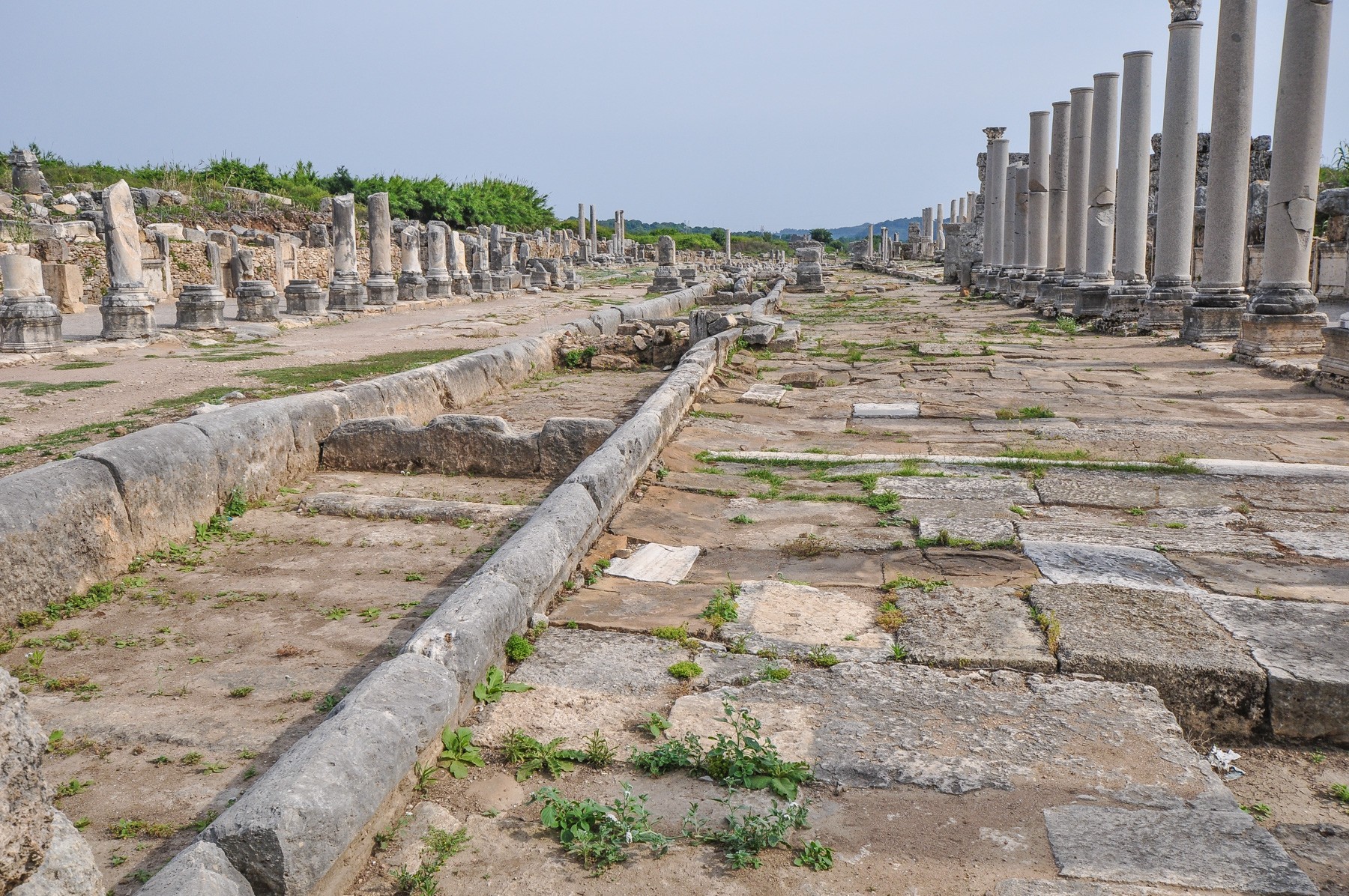
The street Paul travelled.

Paul was the man who brought the message of Jesus to the expanding world of the Roman Empire. In the New Testament book of Acts we can read of the long challenging days and the many miles he covered – no doubt speaking to everyone along the way about this new religion that had changed his life completely. Today you can follow the waymarked St Paul Trail route from Perge to Antioch. The whole walk is 500 km long and the author of the map book says this is wild country! Undoubtedly it was even more so in Paul’s time. Rivers, canyons, white water torrents, thick forests and steep cliffs meant that there was no natural route. Bits of Roman road had been built – the new Via Sebaste – but most of the way ahead was still sheep and goat paths, rocky and overgrown. We’ll begin a few steps of Paul’s journey in the next post…

The street today at Perge, a rocky section of the trail and a stunning bit of roman road

Israel – God’s Witness

It is a small country, just slightly larger than the East of England, 1/16th the size of Germany and 1/24th the size of France..  But when its Prime Minister was assassinated in 1995 the world’s media went into overdrive to report on every aspect of the story and of the possible repercussions. 48 Heads of State or Prime Ministers attended the funeral.

brown cathedral
Photo by Toa Heftiba Şinca on Pexels.com

1948

United Nations which established its credentials to be an independent state. Taking over a semi-barren land, with a population largely culled from refugees after the trauma of the holocaust, and surrounded by nations vowing to destroy it.  Israel has been transformed into a small but powerful nation with great military strength and vigour. Attempts by Arab nations to destroy it have been notably unsuccessful.

Whether the world acknowledges it or not, we have seen a modern miracle. To understand this, we have to delve back into ancient history.

There has, of course, been a nation of Israel before. History, and the Old Testament of the Bible tells us that the Jewish people settled into the land in about 1400BC – a somewhat bigger land than the nation now occupies – and they eventually became a powerful kingdom. They were at that time the only nation that worshipped God. They were surrounded by other nations who worshipped idols and, as a result, of inter-marriages, (which had been forbidden by God), trading exchanges, etc., the purity of their worship became tainted with that of the idols. Over the centuries, the moral tone of the nation weakened; they were defeated and the nation was effectively destroyed by the Babylonians in 587BC.

Eventually, some of the people were able to return to their land and attempt to re-establish the nation and the worship of God, but they were never again truly independent, never again a kingdom. After the Romans attacked, Jerusalem in 70AD, and again in 130AD, Israel was no more. Its people were scattered, its capital city in ruins.

130AD

For 1800 years Israel was subjected to many hundreds of years of persecution. Other nations would have disappeared; shorn of any authority or purpose to hold them together, to retain national pride and identity. The natural course of history would have been for their survivors to intermarry and merge into the nations which had given them sanctuary and, as Jews or Israelis, vanish from history.

 1642

But a Jew is still a Jew, a distinctive race of people. As early as 1642, a petition was placed before the British Parliament “That this nation of England shall be the first and readiest to transport Israel’s sons and daughters in their shops to the land promised to their forefathers, Abraham, Isaac, and Jacob for an everlasting inheritance”. But it was not until the end of the 19th century that a definitive movement began among Jews to attempt the re-establishment of the nation of Israel in their ancient land. Against all odds, this has happened.

The amazing significance of this wonder has not been fully realised by many people. While it is said that ‘The Jew has stood by the graveside of all his persecutors’, the concept of a people that has not been a nation for 2000, not only re-estabilishing itseld but even doing so in the land from which the people were banished two millennia ago – is truly miraculous.

Whatever we think of the situation, whether we support Arabs or Israelis in their fierce and bitter fight over the land and Jerusalem, we cannot but agree that it is a remarkable situation. What is even more remarkable is that it was all predicted in the Bible. God, through His prophet, told the Israelis “I will make you a ruin and a reproach among all the nations around you, in the sight of all who pass by. You will be a reproach and a taunt, a warning and an objector of…” (Ezekiel 5, 14/15 – about 595BC). To their king (their last king), God said “O profane and wicked prince of Israel, whose day has come, whose time of punishment has reached its climax, this is what the Lord says “Take off the turban, remover the crown … A ruin! A ruin! I will make it a ruin! It will not be restored until he comes to whom it rightfully belongs; to him, I will give it” (Ezekial 21, 26/27 – about 590BC).

The Jews have a special place in the earth. Love them or hate them, they are God’s witnesses – “You are my witnesses” declares the Lord, and my servant whom I have chosen” (Isaiah 43, 10); and again, “You are my witnesses that I am God” (v12).

Watch the Jews and you will find proof that what God said would happen, has occurred. God did say that the nation as it then was, would be destroyed – and it was; that the land would be a ruin – and it happened. God also promised that the Israe3lis would be brought together once more, in their old land – and this has happened.

Bible writers are unanimous in their confident assertions that when the Israelis occupy the land, the return of Jesus would follow.

Watch the news! Watch Israel!

The birth of Jesus – A Christmas statistic that makes sense

American Christians are far from unanimous when it comes to understanding the significance of who Jesus is, a survey by Lifeway Research shows. Just 63% of regular church-going Christians in the USA believe that the Son of God existed before the birth of Jesus. This means that 37% of the Christians who turn up in America’s churches regularly on Sunday are either not sure or do not believe that Jesus pre-existed.

This has caused alarm in some quarters, alongside despair that so many seem to be unaware of orthodox beliefs or have even deliberately departed from them. Of course, if Jesus did not exist prior to Bethlehem, then this strikes right at the heart of the doctrine of the trinity. But instead of panic, is there something in this Christmas statistic that should give everyone pause for thought? Perhaps the figures reveal something important?

Click here to read more>>