
Someone Worth Looking At

We can become distracted by our mobiled phones

Photo by Richard Williams on Unsplash

It’s surprisingly easy to pick up your phone to check one thing and emerge twenty minutes later knowing rather more than you intended about someone you’ve never met.

There’s plenty to enjoy in what we watch and read. But what holds our attention also helps to shape us. Some things leave us refreshed or even grateful. Others leave us restless, comparing our ordinary lives with everyone else’s social media highlights. It’s worth asking: what are we giving our eyes to, and what is it doing to us? 

Paul offers a hopeful possibility: as we look towards Christ, we are gradually changed to become more like him. This isn’t another task to add to the self-improvement list. It’s an invitation to spend time with someone whose goodness can begin to rub off on us. 

That brings us to John, on the island of Patmos. Far from his fellow Christians, he receives a vision of Jesus that gives him far more to see than he could have expected. (Revelation 1:9–13)

This is no faded figure from the past. Jesus is alive and present, standing among the lampstands that represent his churches. His white hair speaks of wisdom; his eyes, like a flame of fire, suggest a gaze that misses nothing. He sees beyond appearances, knowing both what needs to change and what hurts. (Revelation 1:12–14, 18, 20; 2:2–4, 9)

There is something unsettling about being seen so clearly. But there is comfort in it too. We don’t have to explain everything perfectly, or pretend we’re managing better than we are. 

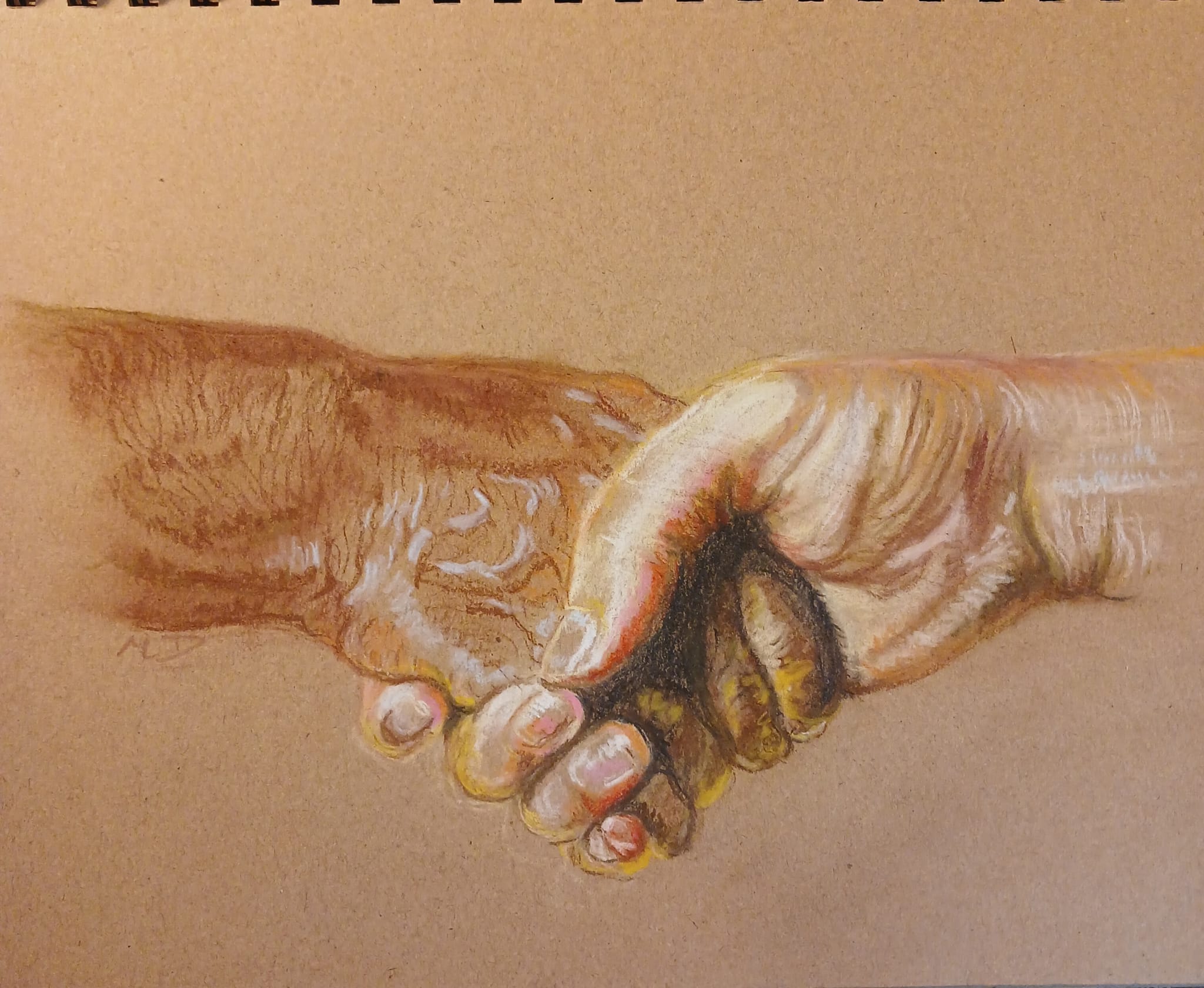
John is overwhelmed. He falls at Jesus’ feet as though dead. And then comes a wonderfully tender moment: Jesus places his right hand on him and says, “Do not be afraid.” (Revelation 1:17)

The presence of the Lord Jesus brings John to the ground. He is also the one who reaches out to reassure him. His glory and his kindness work together.

Perhaps that is where this vision invites us to begin. Not with a guilty promise to spend less time on our phones, but with a little more room to look at Christ: to notice his wisdom and his care for his people. 

We don’t have to turn away from everything else that interests or delights us. But among all the things asking for our attention, here is someone worth returning to. As we come to know him better, we may find ourselves becoming a little steadier, a little less afraid. 
The Interruption You Didn’t Schedule

Tuesday will look a lot like Monday. Next year will look a lot like this one too. Most of us live like that. We assume life will stay as it is. Usually it does. That is where the trouble hides.

Photo by Marija Zaric on Unsplash

Acts 10 tells the story of Cornelius, a Roman officer. He had a good life. He was generous. He was devout. He was well liked at home. The Bible speaks well of him too. That makes what happens next surprising.

He doesn’t get praise. He gets interrupted.

It is three in the afternoon, the hour of prayer. A familiar part of the day. Then something breaks in. He is told to send for Peter, a fisherman he has never met. It makes no sense. And the message is plain: Cornelius is missing something.

Read the chapter and a pattern of interruption stands out. An angel interrupts Cornelius at prayer. A vision interrupts Peter at lunch. Messengers interrupt Peter while he is still thinking about the vision. Then Peter is interrupted again in the middle of speaking. Four interruptions. None of them convenient. All of them kind.

Here is the uncomfortable bit: a well-run life is hard to interrupt.

If your days are chaos, you expect change. But if life is working — a career, a routine, a settled set of views — you want to keep it going. Every hour is spoken for. Every question already has an answer. That is not always arrogance. Sometimes you are just busy, and life feels fine.

And notice this: Cornelius was not resisting anything. He was praying. It was habit. He was not expecting interruption.

Most of us are closer to that than we want to admit. We don’t reject a new way of life. We just never leave room for it.

An uninterruptible life does keep us safe, in a way. Safe from being wrong in a way that changes us. Safe from having to let go of a grudge. Safe from facing that two-in-the-morning ache of anxiety, because managing it feels easier than letting anything heal it.

But that’s not peace. It is a stalemate. And God loves us too much to leave us there.
Look who does the interrupting. Cornelius would never have thought of sending for Peter. Peter would have called the whole thing out of the question. Neither of them planned it. Both ended up somewhere neither could have reached alone.

The initiative was never theirs. It was God’s. That is how new life begins. Not with us improving. With him coming in. At the end of the chapter Peter says they killed Jesus, hung him on a cross. Finished. Buried. But God raised him to life on the third day.

Two small words: but God. Not you tried harder. God acted. Paul says that while we were still sinners, God showed his love for us (Romans 5:8). He tells the Ephesians, “But God, rich in mercy, made us alive” (Ephesians 2:4-5). Grace is always like that. It arrives before we think to ask.

So the question is not whether you are a good person. Cornelius was. The question is simpler: are you still reachable by a God who wants to give you more than you have settled for?

Perhaps something in you feels unsettled. A discomfort you cannot quite file away. A quiet sense that life is respectable but still hollow. Every instinct says tidy it up. Get back to the routine. Prove everything is fine.

Don’t. That may well be Him, and He is not coming to scold you.

Cornelius could have finished his prayers and died admired by those who knew him – and unchanged. Instead he sent for the man. He left the routine open long enough for Christ to walk in.

Hope rarely knocks politely. God interrupted a good man’s prayers to give him Jesus.
Let him interrupt yours.

Lessons from Judges 2

A challenging book

The book of the Judges can be difficult to understand. Its stories contain violence, murder and bloodshed, and some of its accounts are particularly challenging.

The book ends with the words:

“In those days there was no king in Israel; every man did what was right in his own eyes.”
Judges 21:25

What can we learn about God from this difficult book, and particularly from chapter 2?

God is faithful

In verse 1, God says:

“I will never break my covenant with you.”

Human promises can be unreliable, but God’s promises are not. He is constant, faithful and trustworthy.

Yet God also warns Israel about the consequences of disobedience. They were told not to make covenants with the people of the land and to destroy their altars. They were to remove the temptation, because these things would become “thorns” and “snares”.

There is a lesson here for us. What are the “thorns” and “snares” in our own lives? Is there anything to which we have become too attached? Is something becoming more important than our relationship with God?

Sometimes we need not simply to resist temptation, but to remove it.

Saved by grace

Judges tells us that the generation who served the Lord eventually died, and a new generation arose who “did not know the Lord”.

Israel had been commanded to teach their children about God, but somehow that faith had not been passed on.

Yet the earlier generation is still described as serving God, despite their failures. They wept when their disobedience was exposed and turned back to Him.

We are reminded that we cannot earn our salvation. We are saved by grace.

The next generation, however, turned to the Baal, Baal was the name used for a number of Canaanite gods associated particularly with fertility, rain, crops and prosperity. Verse 12 says they:

  • forsook God;
  • followed other gods;
  • bowed down to them; and
  • provoked God to anger.

A God who saves

God’s anger was kindled, and the people experienced great distress.

But what happens next is remarkable.

Verse 16 says:

“Then the Lord raised up judges, who saved them out of the hand of those who plundered them.”

These were people who had turned away from God. Yet He saved them.

And when they turned away again, He continued to respond with compassion.

Verse 18 says:

“For the Lord was moved to pity by their groaning.”

What an extraordinary picture of God.

He is not a God who is easily angered. His compassion is greater than our failures. He sees people in distress and is moved to act.

The Good Shepherd

We see exactly the same with Jesus. He is not easily angered, he is in fact only once described as being angry (Mark 3 v 5) but on many occasions he is described as being full of compassion.

In Mark 1:40–41, a man with leprosy comes to Jesus in great distress. Jesus is “moved with pity”, reaches out and touches him, and he is made clean.

Later, in Mark 6:34, Jesus sees a great crowd and has compassion on them because they are:

“like sheep without a shepherd.”

That description could equally apply to the people in Judges—and perhaps to many people today.

And so when we focus on the Good Shepherd, we see the one who lays down His life for His flock.

Not because we deserve it.

Not because we have earned it.

But because of His love.

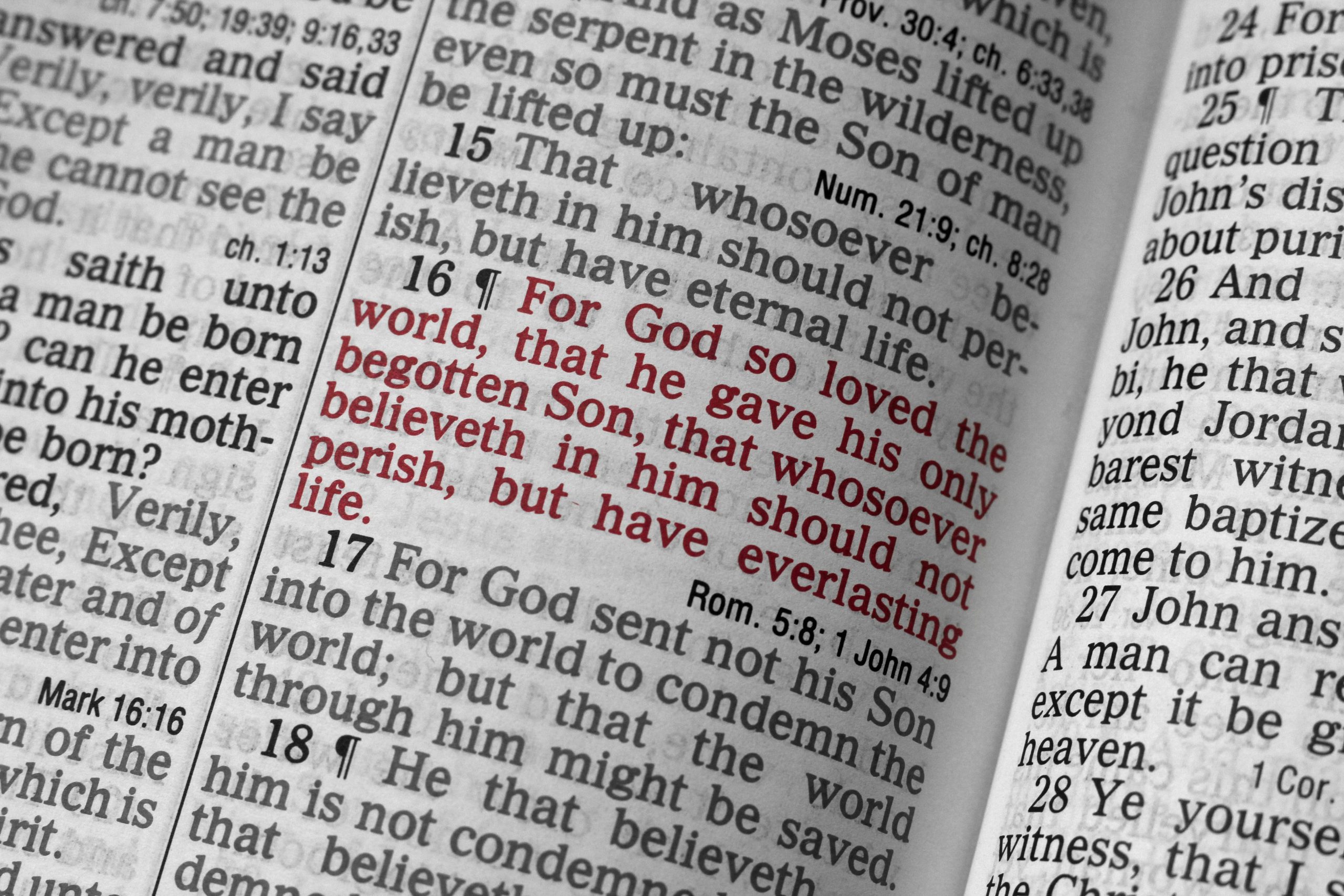
“For God so loved the world that He gave His only Son, that whoever believes in Him should not perish but have eternal life.”

And, wonderfully, Jesus came:

“not to condemn the world, but that the world might be saved through him.”

Saved.

A Saviour sent by a loving Father.

The same God who raised up ‘saviours’ for His people in the days of the Judges has given us the ultimate Saviour—not because we deserve Him, but because of His grace and love.

Let us give thanks for our faithful, compassionate God and for the Good Shepherd who laid down His life for us.

We are saved by grace.

Why Right and Wrong Point Beyond Us

Taking the correct path

Some things aren’t just unpopular or outdated. Some things are just wrong.

Cruelty to children. Betraying a friend. Exploiting the weak. Lying to protect yourself while someone else pays the price. Deep down, we don’t treat these as matters of taste, like preferring tea to coffee. We know they reflect something real.

That is where the moral argument for God begins.
Human beings don’t merely have preferences. We have a sense of obligation. We know there are things we ought to do, even when we don’t want to do them. We ought to tell the truth. We ought to keep promises. We ought to care for the vulnerable. We ought to forgive. We may ignore that voice or bury it under excuses, but we can’t quite silence it.

The question is: where does that “ought” come from?
If the universe is only matter, energy, time, and chance, then morality becomes difficult to explain. Atoms don’t produce duties. Chemicals don’t create commandments. Evolution only gives an explanation why certain behaviours are useful for survival. But “useful” isn’t the same as “right.” A lie may be useful. Revenge may feel satisfying. Selfishness may help me get ahead. But we still know that some things are wrong even when they work.

The moral argument says this: if there are real moral truths, there must be a real moral foundation. If goodness isn’t just a human invention, then it must be grounded in something beyond ourselves. More than that, it must be grounded in someone. Moral laws are not like the law of gravity. They address us personally: telling us what we ought to do, and holding us responsible when we refuse. They command us and challenge us. This points not merely to a force, but to a personal God who is just and has authority.

Of course, this argument is not just comforting. It’s also confronting. If God is the source of moral truth, then we are not free to invent right and wrong for ourselves. We are accountable to Him. The same moral law that condemns cruelty, lies, and injustice also exposes us.
And that is why the moral argument matters. It’s not just a clever proof. It’s a mirror. It shows us that our hunger for justice, goodness, and love is not an accident. It is a signpost.
We don’t live in a silent universe. Our conscience is whispering. The question is whether we are willing to listen.

The Big Leap Project

Our second look at this series of inspirational faith videos which have been put together.
This one is from Todd who was struggling with his business. Read what he has to say here: The Big Leap Project.

How Jesus Saved My Family’s Business When Nothing Else Could

When a family business was on the verge of collapse and nothing else seemed to work, they turned to Jesus—and everything changed. This is a story of unexpected hope, real struggle, and the power of faith to bring light in the darkest moments. If you’re feeling stuck or searching for direction, this testimony offers powerful encouragement. __ At The Big Leap, our mission is to empower people to embark on explorations of faith, and to help people strengthen their faith muscles in the journey of life.

Inspired by God’s word

Recently I shared some pictures illustrating the Lord’s prayer.  There was some very kind feedback, so I wanted to share another inspirational Bible passage, which is Psalm 23.  This is a firm favourite at church services, either read from the Bible or sung as the hymn based on the words of the psalm.  The photographs were chosen to illustrate different phrases.  I wonder what pictures come to your mind ?

The Lord is my shepherd, I lack nothing.  He makes me lie down in green pastures,

he leads me beside quiet waters, he refreshes my soul.  He guides me along the right paths for his name’s sake. 

Even though I walk through the darkest valley, I will fear no evil, for you are with me; your rod and your staff, they comfort me.

You prepare a table before me in the presence of my enemies.  You anoint my head with oil; my cup overflows.

Surely your goodness and love will follow me all the days of my life, and I will dwell in the house of the Lord forever.

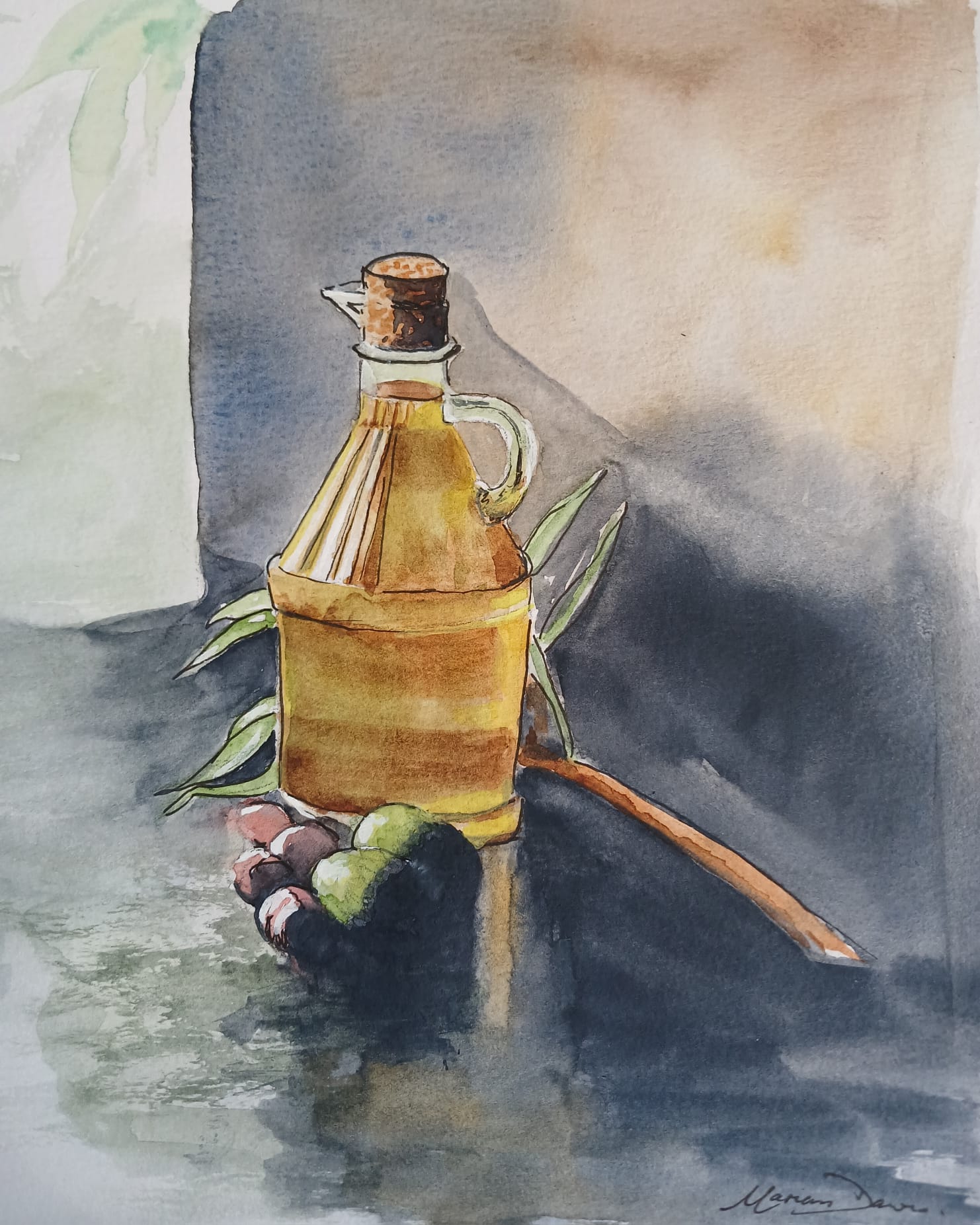
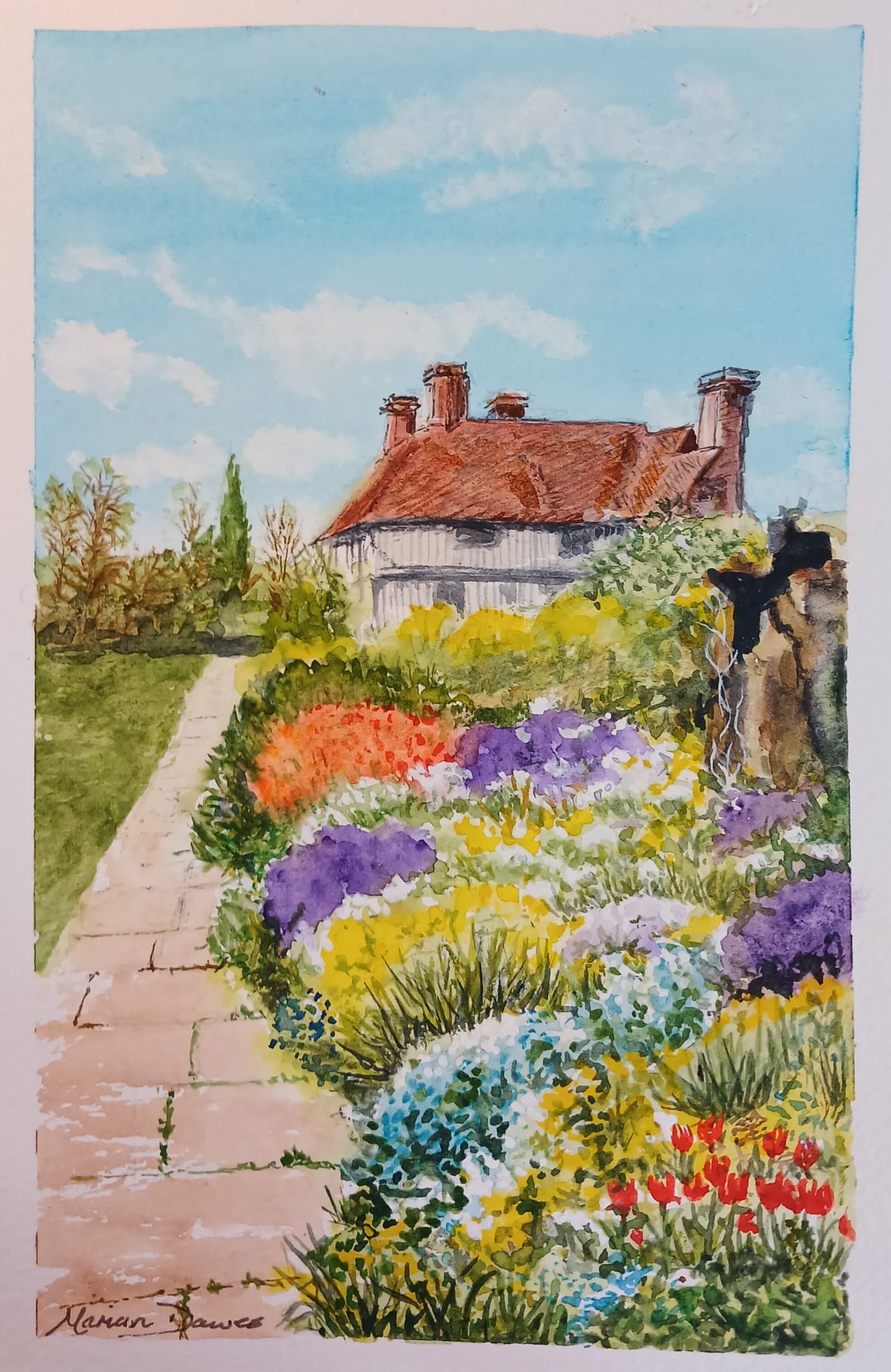
And here are a handful of the paintings that were produced as a result of sharing these verses and pictures. 

Bible references: New International Version

Images from Unsplash.com :
Sheep on hillside with sunset: Jaka Škrlep
Still waters: Jenn Wood
Dark Valley: Karsten Wurth
Hands: Ave Calvar
Table: Kevin Schmid
Oil: Roberta Sorge
Overflowing cup: Ephraim Mayrena
Daisies: Garston Roulstone
Scottish Lake: Gary Ellis

Images from Pexels.com:
Shepherds Staff: Photo by Mehmet Has

Images from other sources:
Green pastures: Sally Taylor

In the Footsteps of Paul

In our last instalment we read of the bravery of the early christian preachers and the towns they travelled to.

Unexcavated Derbe

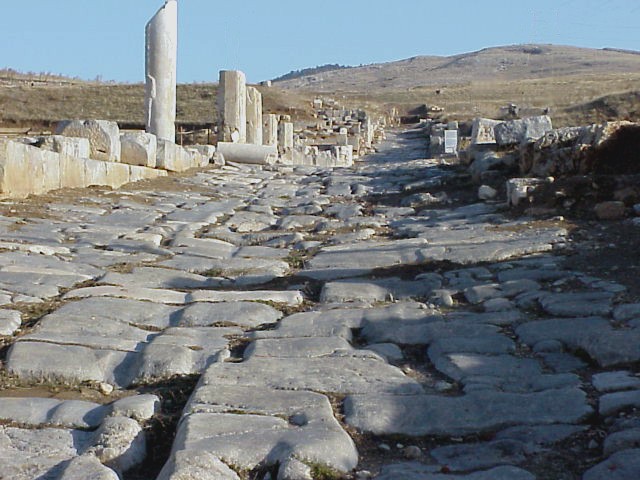
Lystra and Derbe are two of the three unexcavated Christian sites in Turkey but they are still well worth visiting for the thrill the atmosphere gives you in these remote spots. Today in Lystra you can visit a small open-air museum where inscriptions and archaeological fragments lie on the ground. It is good to see that the historical setting of our New Testament is so accurate and visible to us 2,000 years on.

Lystra – modern day Hatunsaray – is in a lush valley about 35k south of Iconium and it had been a Roman colony town for more than 60 years when our friends get there. More than 1000 retired soldiers were given land and the town grew quickly. The bible records a strange incident when Paul and Barnabus arrive. Another event that divides people into believers and haters. We need to think which camp we want to be in. Paul looks into the eyes of a man who has been unable to walk since birth. He sees the man’s faith and he heals him so that the man gets up and walks. What a miracle! The crowds who see this are a superstitious lot and they go a bit wild calling the disciples Zeus and Hermes – Roman pagan gods. Paul immediately tells them to desist and explains again the power of Almighty God the Creator and the Sustainer of all life. And once again this message drives the Jewish population mad and they stone Paul, drag him out of the city and leave him for dead. Thankfully the new believers in Jesus stay around to help him recover and the very next day he leaves and heads to Derbe. What an amazing man he is.

I wonder if Paul thought back to when he was on the ‘other side’ of Christianity? – when he was the one who dragged men and women off to prison, authorised torture and death for these fledgling believers. Perhaps these memories make him ultra aware that he is now the one suffering, taking the beatings and the stonings. He infamously stood by when the faithful disciple Stephen was killed by the mob. There is perhaps no-one else in the bible who had such an amazing turn around in his life from hater to lover than Paul. His new life sends a wonderful message to us that there is always a way back to faith and forgiveness when we turn around and look to God. All these thoughts might have occupied his mind while he is chased out of yet another city, fearing for his life.

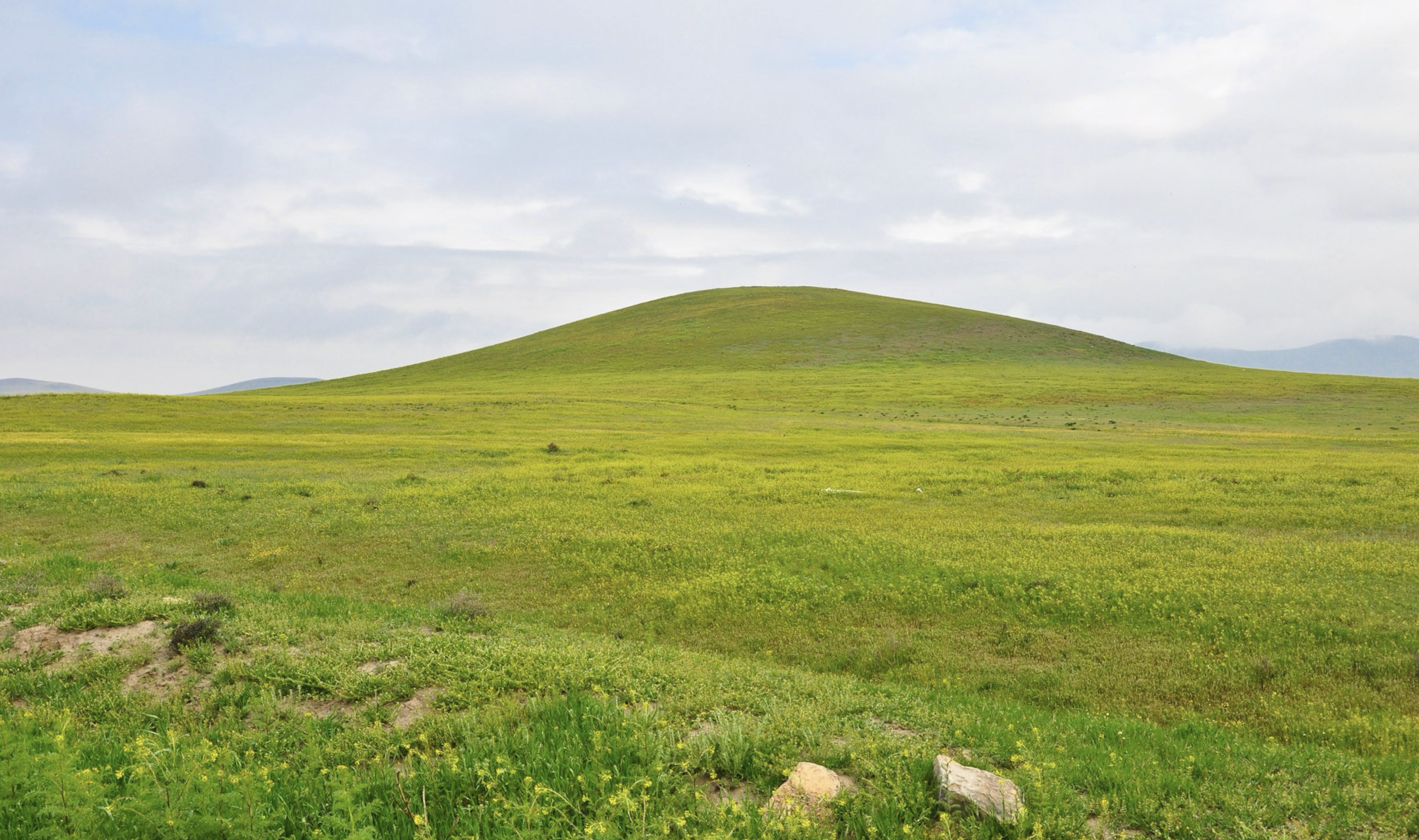
Bruised and battered from the stones and the kickings, he and Barnabus head to their next destination. Derbe is today a dry and dusty mound. You can climb up to the top and walk around the scrubby ground and find pottery shards and glass fragments scattered everywhere. You can seem for miles across the plains. When Paul was there Derbe was a frontier town and he visited it three times on his various journeys (Acts 14, 16, 20). One of Paul’s companions on a trip was a man called Gaius and he was a trusted friend who lived in Derbe. Paul gave him the commission to take the collection that had been raised to help the poor Christians back in Jerusalem. Gaius was obviously a devout disciple and one whom Paul knew would be best placed to disperse the funds back in Israel. Derbe turns out to be a happier town for our friends. Acts 14 v 21 says, “They preached the gospel in that city and won a large number of disciples.” Today there is also a stone inscription in a local museum, from a few centuries later, which reads “the most God-loving Michael, bishop of Derbe”. A town of faithful believers.

Olympic Sports in the Bible

The modern Olympic Games are a revival of the Ancient games which were hosted on the plains of Olympia in Greece, as part of a pagan festival.  People in Bible times were aware of these games and others like them, and there are references to these sports in the Bible.

The apostle Paul was born approximately AD 0-10, so the games would be a regular feature during his lifetime.  It is believed that he referred to these athletic games in 1 Corinthians chapter 9 verse 25 when he wrote “Everyone who competes in the games goes into strict training.”  All the participants had to exercise self-restraint in order to win the prize.  That might be constraints over leisure time; training rather than spending time with friends, or constraints in their diet; eating healthy, energy giving food rather than the things they perhaps enjoyed and preferred more.

Games were also held in Corinth every two years (the year before and after the Olympic games) and involved similar events.  The Christian believers at Corinth would be very familiar with the concept of an athlete from these games and it was a good example for Paul to use.  In 1 Corinthians chapter 9 verse 24 he began by saying “Do you not know that in a race all the runners run, but only one gets the prize ?  Run in such a way as to get the prize.”  Paul was likening the Christian journey through life, to a race, with Jesus’ followers as the athletes.  The athletes at the games had to have self-restraint and dedication to achieve their best.  In the same way, the follower of Christ has to exercise self-restraint in the way they lead their life and show dedication to Jesus.

The prize that the athletes won at the Ancient games was an olive wreath crown that would soon decay.  The prize that Christians are striving for will last forever, that is, they will receive immortality.  Christians try to live their lives doing what God wants of them.  In the Olympics only one person can win an event, but in this race, the prize is available to anyone who wants it and strives for it.

In another of his letters to the early Christian church, Hebrews chapter 12 verse 1, Paul advises “let us run with perseverance the race marked out for us”.  Perseverance means endurance and constancy.  Therefore it is a long race which requires continual effort and stamina over the course of a lifetime.  There is guidance provided throughout the Bible to help us with this.  Take a look at it and find out how the prize of immortal life can be yours too.

Who can we trust?

Fake photographs.  Fake emails.  Fake news.  It leaves us wondering “who can we trust these days ?” 

We live in a world that has so many problems, whether they’re global problems or our own, personal ones.  Many need to be addressed urgently.  So is there anyone we can trust ?

It may be surprising, but the answer is “yes”, there is someone we can trust.  Someone who is always there and never changes.  The Bible tells us about God, the creator of the world, which He created for His pleasure and for a purpose.  It also refers to Him as a Father and that we are His children.  He is always there and will never leave or abandon us.  We can talk to Him in prayer – to thank Him for what He has done for us, but also to discuss our problems, knowing that He will help.

The Bible explains His plan with the earth and all humankind.  God’s son, Jesus, will return to the earth and rule the nations with peace and righteousness.  God can be trusted to do as He says.  It gives us all hope in what sometimes feels like a hopeless world.  Let’s put our faith and trust in Him.  The Bible says anyone who comes to Him must believe that he exists and that He rewards those who are sincerely seeking Him.

Personally, this has been a great help to me in my life.  Maybe it could help and encourage you in yours, however difficult the problems feel at the moment.  Isn’t it at least worth looking into ?  It costs nothing to open a Bible and see just what God has to say to you.  Maybe it could change your life now and be a wonderful hope for the future when Jesus returns.

In the Footsteps of Paul

Back to the blue skies of Turkey….

Why the rush to Pisidian Antioch? Well, we mentioned last time that Paul had sailed from Paphos in Cyprus. Acts 13 tells us that the chief Roman proconsul on the island was a man named Sergius Paulus. He hears Paul teaching about the resurrection of Jesus and becomes a Christian believer. If you become a follower of Jesus, the first thing you want to do is tell others – especially your family – about this amazing change in your life. What’s a recent convert on Cyprus got to do with a Roman colony town in the middle of the Turkish mountains?

It took another 1,866 years for a possible explanation to be dug up! The end of the 19th century produced a long line of European archaeologists who found rich sites to excavate all over the Middle and Near East.

William Ramsey was a Scottish archaeologist and Crown-appointed university scholar. He was raised an atheist and one goal in his work was to refute the bible and its claims. But as he worked he discovered more and more facts that confirmed the accuracy of the scriptures. He stunned the intellectual world of his day by converting to Christianity and said that the narrative of Paul’s travels rests on first-class authority. Ramsey is still considered the finest authority in the world on the history of Asia Minor – a brilliant mind; convinced that the bible was true. He believed that the Bible should be accepted as the word of God because of the evidence of his explorations and discoveries.  Next time let’s look at one of the remarkable inscriptions discovered here.

William Ramsey