

Why There’s Something Rather Than Nothing: A Clue Toward God

Watercolour painting of the Earth. MD
Matthew 6:10: “On earth as it is in Heaven”

The Glowing Orb 

Picture walking into a room and finding a glowing orb hovering in mid-air. Your first thought would be, “Why is that there?” No one would just shrug and say, “It just is.” Everything we come across seems to have a story — a reason it exists — some kind of cause or context.

Now zoom out a bit. The whole universe is like that glowing orb, only bigger and more complicated — full of stars, planets, and people sipping coffee while scrolling through blogs like this one. But here’s the strange thing: the universe didn’t have to exist. It had a beginning, and that naturally leads to the question — why is there something rather than nothing at all?

Looking for an Explanation

Everything around us — you, me, oceans, mountains, even puppies — exists, but none of it had to. So what explains it all? You can trace one thing back to another — a tree grows from a seed, a seed from another tree — but at some point, the trail can’t just keep looping forever. There must be some ultimate reason why there’s anything here to begin with, something that doesn’t rely on anything else to exist. Philosophers call it a necessary being. We call Him God.

A Thought Worth Considering

This line of thinking isn’t meant as a tight proof that God exists; it’s more of an invitation to wonder. If we naturally look for explanations behind small things — an odd light in the sky, a knock at the door, a random text at midnight — why would we stop asking when it comes to everything? The idea that the universe has an underlying reason or purpose feels like a thought worth taking seriously. Maybe that quiet sense of order we notice in the world isn’t an illusion, but a clue.
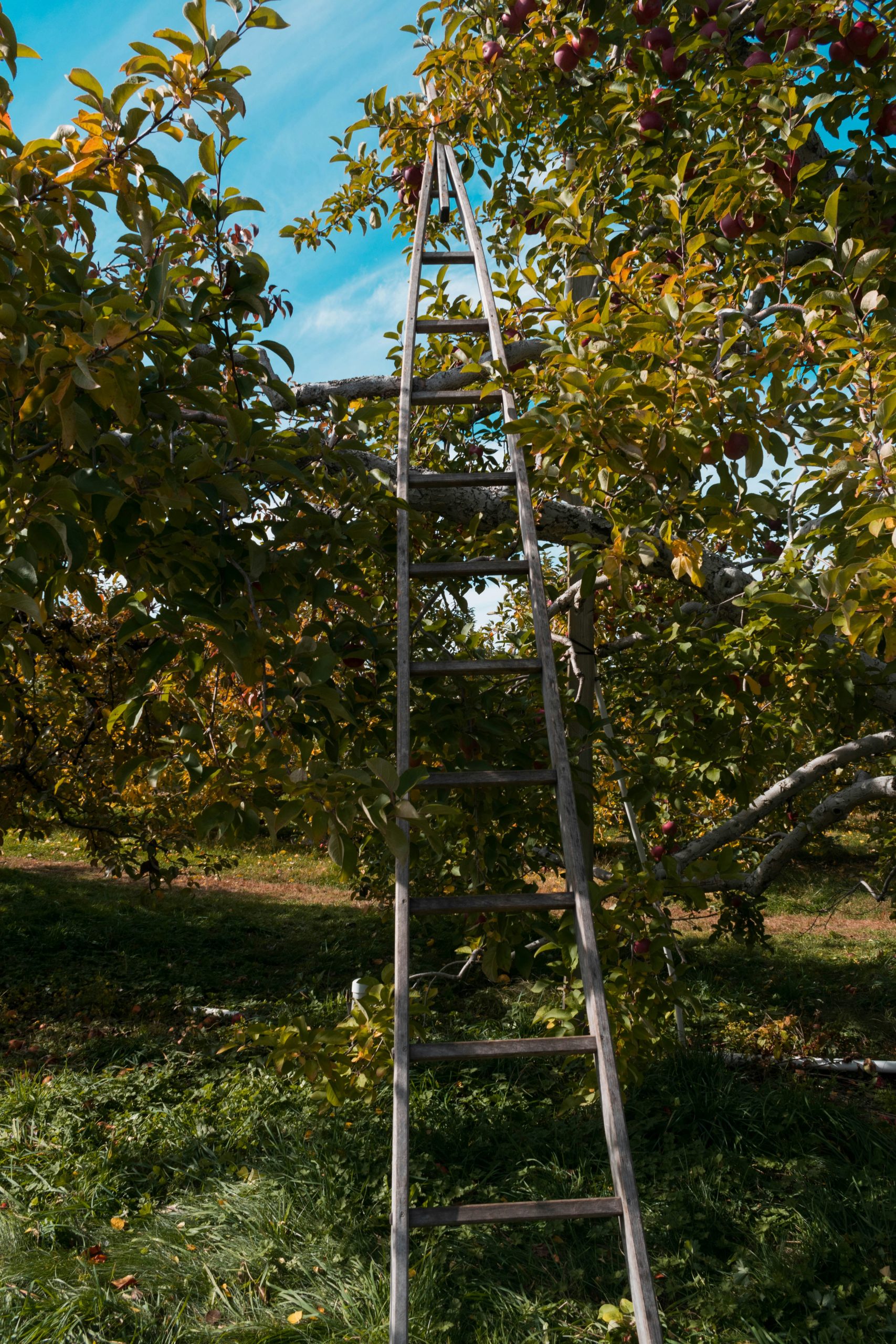
Will I Ever Be Good Enough? Why “Life as a Ladder” Keeps Us Climbing—and Crushed

Photo by Alexandra Lowenthal on Unsplash

We love ladders. We love rankings and scores. They show us where we stand.

In life, we ask, “Am I good enough?” We climb if we feel low. We hold on if we are high. But ladders trap us. They don’t set us free. The singer, Madonna, once said her fear of being average drove her. Praise fades.

The climb never ends. We bring this thinking to faith. We count rules and compare ourselves. “Am I good enough for God?” Ephesians lists many commands. It is hard to remember and do them all. Trying to be good feels tiring, like endless climbing. Jesus challenges this. In Mark 10, a man calls him “good teacher.” Jesus says, “No one is good except God.” There is no ranking here. Goodness is not a score.

Then Jesus asks for the impossible. “Sell everything.” He isn’t raising the bar. He shows the ladder itself is broken. We cannot climb our way to God. “With man this is impossible. With God all things are possible.” We are made right with God by grace through faith—not by climbing rules (Eph. 2:8–9).Commands are not gone. They move place. Ephesians 4 says to change: put off the old self, be renewed, put on the new self. Obedience grows out of who we are, not by climbing steps. Apples grow from trees, not ladders. The gospel cuts down the ladder and plants a new life.

Step off. Accept grace. God will change you from the root, so good actions come naturally—like fruit, not desperate climbing.

When Hope Feels Hopeless: Lessons from Joseph of Arimathea

Photo by Stefano Pollio on Unsplash

Have you ever felt swallowed by spiritual darkness, where prayer seems pointless, Bible reading feels empty, and hope is just a memory? Maybe you’ve trudged through weeks, months, or years of faithful obedience, only to wonder if anyone—God included—even notices. If so, you’re not alone. The story of Joseph of Arimathea is for you.

Picture the scene: Good Friday. For Joseph, it was anything but “good”—it was the day his hopes died. Jesus, the one he secretly believed was the Messiah, lay lifeless, crucified by Roman brutality. The twelve disciples had vanished in fear. Yet Joseph, a respected leader and previously a “secret” disciple, did something extraordinary. He stepped out of the shadows, asked Pilate for Jesus’ body, and buried him in his own expensive tomb. He risked his reputation, his ritual purity, and his future—all for a King who, by every outward appearance, was defeated.

Why? Because Joseph kept looking for the kingdom of God, even when the King seemed dead. He obeyed when obedience looked pointless. He planted seeds of hope in a soil that felt dry and barren.

Most of us want faith to feel easy, visible, and rewarding. But Joseph’s story challenges us to keep searching for God’s kingdom when all the evidence screams “give up.” His quiet courage reminds us that God’s kingdom often moves forward in the darkness—through unlikely, unseen obedience.

So here’s the challenge: When your faith feels futile, when hope seems buried, will you dare to obey anyway? Will you keep praying, keep hoping, keep looking for God’s kingdom—even when you can’t see it? Set your heart like a watchman for the dawn. Defy despair. The resurrection didn’t just change Joseph’s story—it can change yours, too.

Will you be courageous enough to hope in the dark?